
Multifamily Real Estate Investing: How It Works and How to Invest
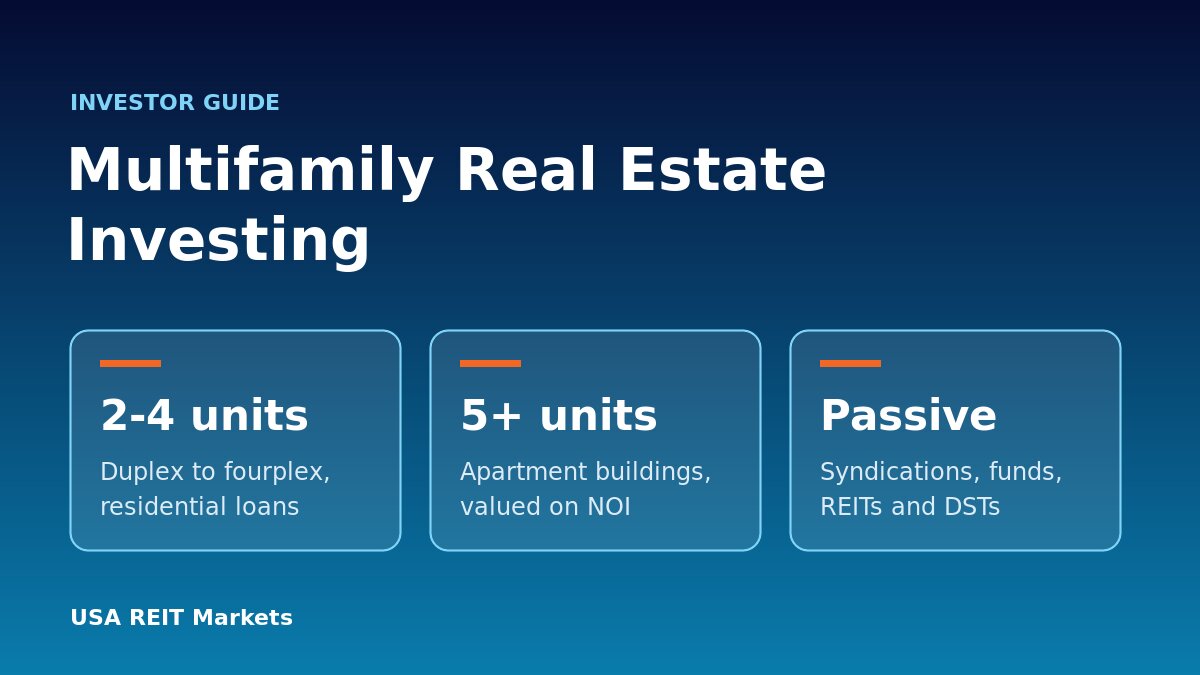
Short answer: Multifamily real estate investing means owning, or owning a share of, residential buildings with more than one unit: duplexes, small apartment buildings and large apartment communities. Investors earn rental income and may gain from the property's value over time. You can buy a building yourself, or invest passively through a syndication, a private fund, a REIT or a Delaware statutory trust (DST).
Multifamily sits between a single rental home and a commercial office or retail building. Rent comes from many tenants instead of one, so one vacancy has less effect on income. Larger buildings are valued and financed as commercial real estate, mostly on the income they produce.
What counts as multifamily
| Type | Typical size | How it's usually financed and valued |
|---|---|---|
| Small multifamily (duplex, triplex, fourplex) | 2–4 units | Residential mortgages; values often follow nearby home sales |
| Small apartment building | 5–50 units | Commercial or agency multifamily loans; valued on net operating income |
| Mid-size and large apartment communities | 50–500+ units | Commercial, agency or bridge loans; valued on NOI and cap rate |
| Specialty multifamily | Varies | Student housing, senior housing, build-to-rent communities and affordable housing, each with its own rules and risks |
The line between 4 and 5 units matters. In the US, standard residential mortgages cover properties with up to four units. From five units up, the property is generally financed with commercial or agency multifamily loans, and lenders and buyers focus on the building's income rather than comparable home sales.
Buildings are also grouped by quality and age, usually as Class A (newer, top amenities, highest rents), Class B (older but well kept) and Class C (older, lower rents, often more repair needs). The class gives a rough idea of rent levels, tenant base and how much work the building needs.
Why investors look at multifamily
- Many tenants, many leases. Income is spread across dozens or hundreds of units, so losing one tenant has a small effect.
- Short leases. Apartment leases usually run about 12 months, so rents can adjust to the market faster than long office or retail leases. That works both ways: rents can fall when the market softens.
- Housing is a basic need. Demand for rental housing doesn't depend on one industry, although local job growth and new supply still drive results.
- Ways to add value. Renovating units, improving management and controlling expenses can raise net operating income, and with it the property's value.
- Financing options. Multifamily has deep lending markets, including government-sponsored agency lenders, which other property types don't have.
- Tax treatment. Depreciation can shelter part of the rental income, and a sale can sometimes be deferred with a 1031 exchange. See the tax section below.
None of this guarantees a profit. Multifamily investments can lose money, and the reasons are covered in the risks section.
Five ways to invest in multifamily real estate
| Route | What you own | Typical involvement | Liquidity | Who it suits |
|---|---|---|---|---|
| Buy a building yourself | The property (often through an LLC) | Active: you or your property manager run it | Low: selling takes months | Hands-on investors with capital, credit and time |
| Syndication | A share of an LLC or LP that owns one property | Passive: the sponsor runs it | Low: often held 3–10 years | Usually accredited investors who want one specific deal |
| Private real estate fund | A share of a fund that owns several properties | Passive | Low to limited | Investors who want spread across properties and a manager |
| Apartment REIT | Shares in a company that owns many properties | Passive | High for listed REITs; limited for non-traded REITs | Most investors, including retirement accounts |
| Delaware statutory trust (DST) | A beneficial interest in a trust that owns property | Passive | Low: no ready market | Accredited investors, often completing a 1031 exchange |
1. Buying a building yourself
Direct ownership gives you full control over the price you pay, the loan, the renovation plan and the management. It also means you're responsible for finding the deal, arranging financing (often with a personal guarantee), handling repairs and tenant issues, and making the property's numbers work. Many owners hire a property management company, which usually charges a share of collected rent.
Small investors often start with a duplex or fourplex, sometimes living in one unit while renting the others. Larger buildings usually need more capital and experience, which is why many investors move to the passive routes below.
2. Multifamily syndications
In a real estate syndication, a sponsor (also called the general partner or operator) finds an apartment property, arranges the loan and manages the business plan. Investors (limited partners) contribute most of the equity and receive a share of the cash flow and sale proceeds.
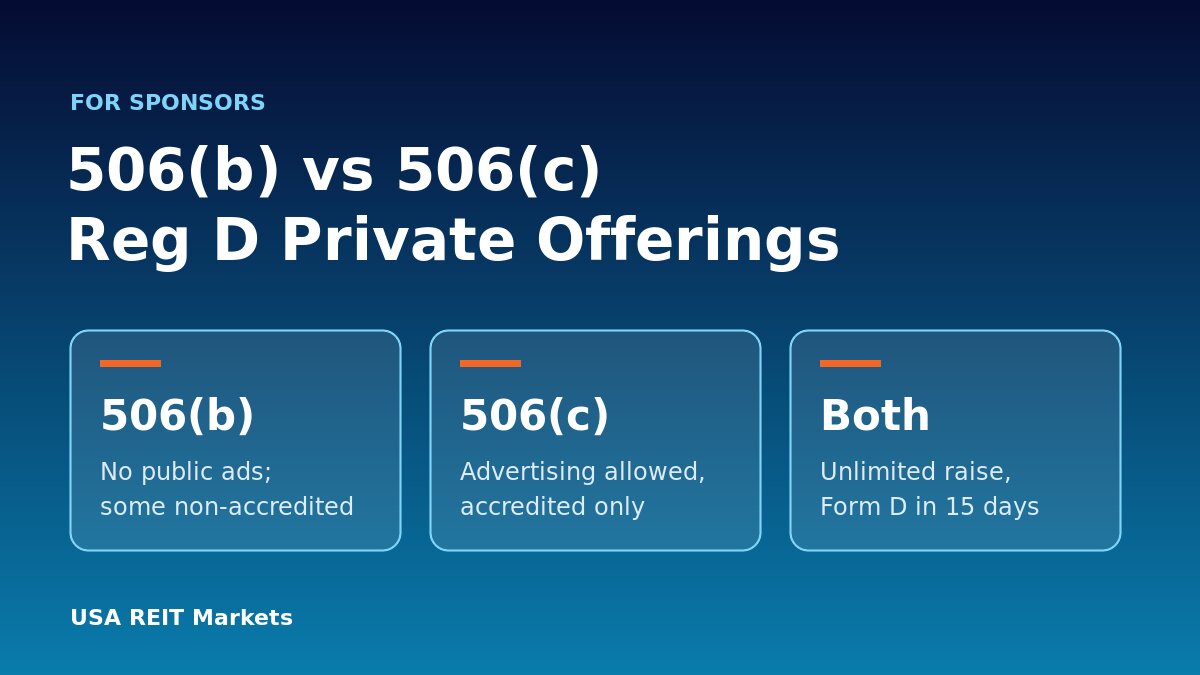
Syndications are usually private placements under SEC Regulation D (see 506(b) vs 506(c)), so many are open only to accredited investors. They often hold the property for 3 to 10 years, and you usually can't withdraw your money before the sale or refinance. Returns depend heavily on the sponsor's experience, the business plan and the loan terms.
3. Private real estate funds
A fund pools money from many investors and buys several properties, sometimes all multifamily and sometimes a mix of property types. You give up the ability to choose individual buildings in exchange for spread across several properties and a professional manager. Fees, the investment period and how you get your money back vary a lot between funds, so read the offering documents.
4. Apartment REITs
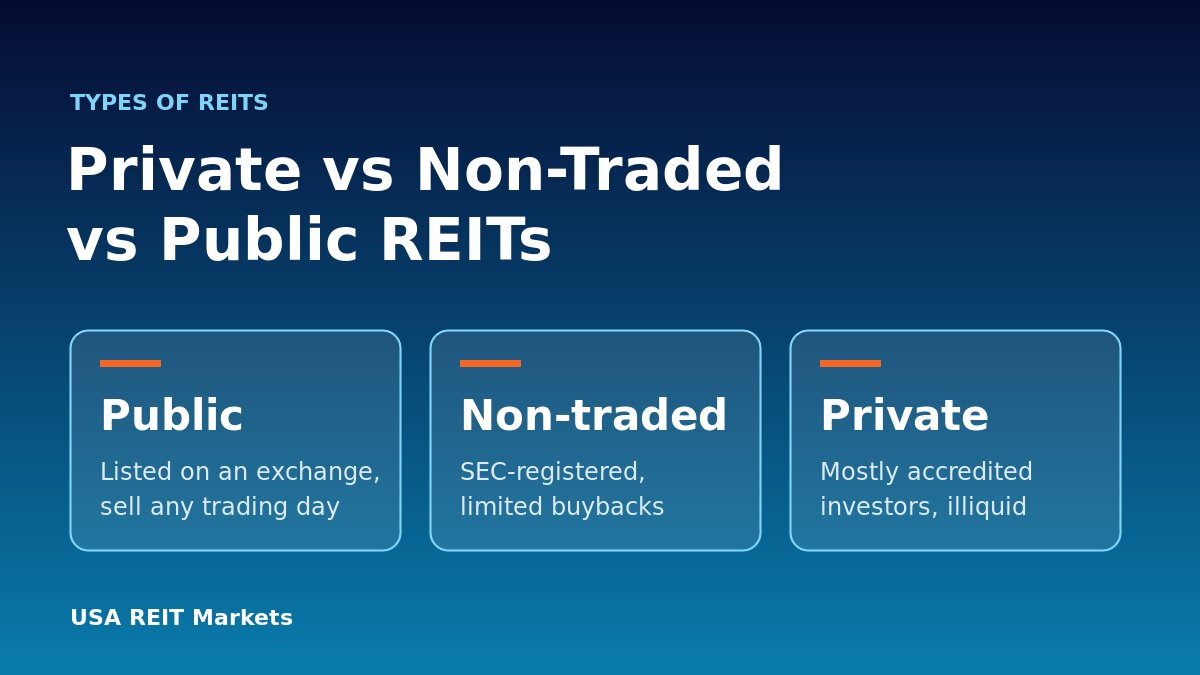
A real estate investment trust (REIT) is a company that owns income-producing property and generally must pay out most of its taxable income as dividends. Several listed REITs specialize in apartments. Listed REIT shares trade on stock exchanges and can be bought with small amounts, but their prices move with the stock market. Non-traded and private REITs don't trade on an exchange and usually have limited ways to sell; see private REITs vs non-traded REITs.
5. Delaware statutory trusts (DSTs)
A Delaware statutory trust lets several investors own beneficial interests in one or more properties, and apartment communities are among the most common DST properties. DST interests can qualify as replacement property for a 1031 exchange, so investors selling a rental property often use them to defer capital gains tax while moving to a passive investment. DSTs are generally offered only to accredited investors, and the trust structure limits what the sponsor can change after the offering closes.
The numbers to check before you invest
Whether you buy a building or review a sponsor's offering, the same handful of numbers tells you most of the story.
| Metric | What it tells you | How it's calculated |
|---|---|---|
| Net operating income (NOI) | The income the property produces before loan payments | Effective gross income − operating expenses |
| Cap rate | The return on the property's price, before financing | NOI ÷ purchase price |
| Cash-on-cash return | Your yearly cash return on the cash you put in | Annual pre-tax cash flow ÷ cash invested |
| Debt service coverage ratio (DSCR) | How comfortably income covers the loan payments | NOI ÷ annual debt service |
| Occupancy and rent per unit | Whether the rent roll is healthy and in line with the market | From the rent roll and market comparisons |
| Expense ratio | How much of the income goes to running the building | Operating expenses ÷ effective gross income |
| Equity multiple and IRR | Total money returned and how fast, over the whole hold | From projected cash flows and sale proceeds |
Read what net operating income (NOI) is for what belongs in NOI and what doesn't, then run any property's NOI, cap rate, cash-on-cash return and DSCR in the free cap rate calculator.
A simple example
Take a 40-unit apartment building with average rent of $1,500 a month.
| Line | Amount |
|---|---|
| Gross potential rent (40 × $1,500 × 12) | $720,000 |
| Plus other income (parking, laundry, fees) | $30,000 |
| Minus vacancy and credit loss (6% of rent) | −$43,200 |
| Effective gross income | $706,800 |
| Minus operating expenses (45% of EGI) | −$318,060 |
| Net operating income | $388,740 |
At a purchase price of $6,500,000, the cap rate is $388,740 ÷ $6,500,000 = about 6.0%. If the buyer borrows $4,225,000 (65% of the price) and the yearly loan payments are $300,000, the DSCR is $388,740 ÷ $300,000 = about 1.30. Cash flow before tax is $88,740 on $2,275,000 of equity (ignoring closing costs and reserves), a cash-on-cash return of about 3.9%.
These figures are illustrative only. Real deals also need closing costs, reserves for repairs, and realistic assumptions about rent growth, expenses and the eventual sale price.
Questions to ask a sponsor
- What is the sponsor's track record with similar properties, including deals that went badly?
- How much of their own money is the sponsor investing?
- What are the loan terms: fixed or floating rate, interest-only period, maturity date, and any rate cap?
- How do the rent and expense assumptions compare with the property's actual trailing 12-month results?
- What fees does the sponsor charge (acquisition, asset management, construction, refinance, disposition), and how is profit split after any preferred return?
- What happens if the property needs more money, or if it can't be sold or refinanced on schedule?
Taxes: depreciation and 1031 exchanges
Residential rental buildings are generally depreciated over 27.5 years under IRS rules, which lets owners deduct part of the building's cost each year (land isn't depreciated). Depreciation can reduce the taxable part of rental income, and passive investors in syndications, funds and DSTs usually receive their share of depreciation on a Schedule K-1 or similar statement. Some owners also use cost segregation studies to deduct parts of the property faster; the rules for accelerated and bonus depreciation change, so check current rules with a tax adviser.
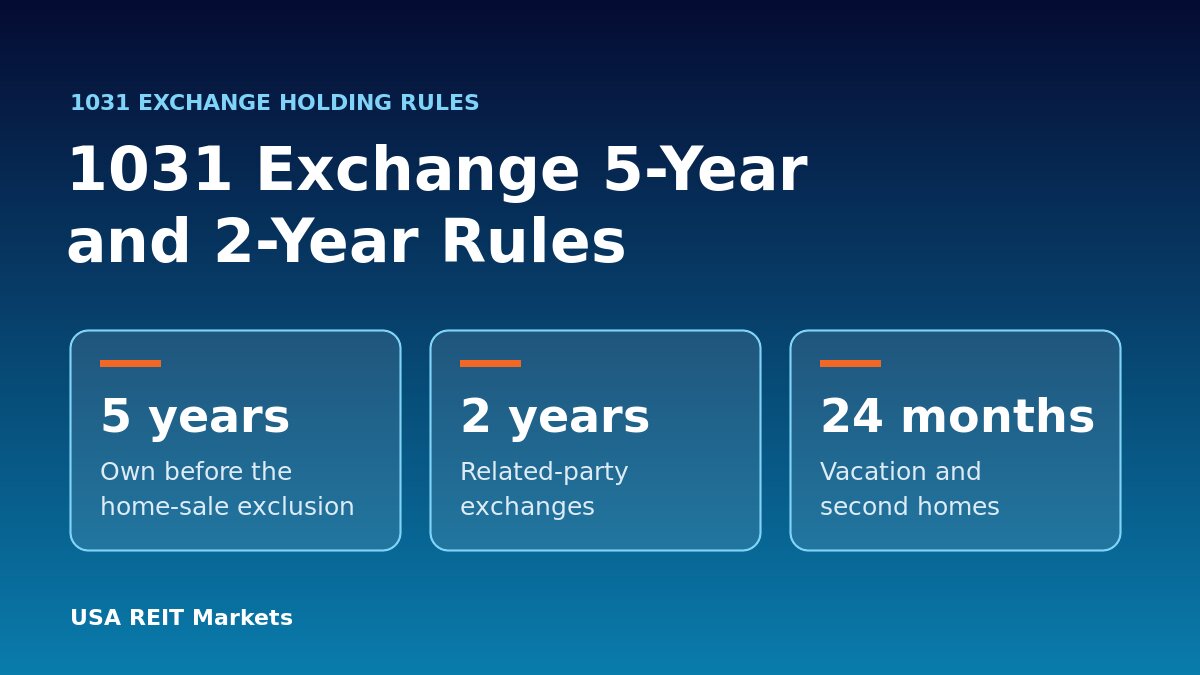
Depreciation isn't free money: when the property is sold, depreciation you've taken is generally taxed (recaptured), and the rest of the gain is taxed as a capital gain. A 1031 exchange can defer both if you reinvest in like-kind real estate within the 45-day and 180-day deadlines. Estimate your deadlines and the tax you'd defer with the 1031 exchange calculator, or read about moving into a REIT through a 721 exchange.
Risks of multifamily investing
- Interest rates and loan terms. Higher rates reduce cash flow on floating-rate loans and can lower property values. Loans that come due when rates are high can force a sale or a capital call.
- New supply. A wave of new apartment buildings nearby can push rents down and vacancy up for several years.
- Rising operating costs. Insurance, property taxes, payroll and repairs can rise faster than rents.
- Local economy. Job losses or population decline in the area hit occupancy and rent.
- Regulation. Rent control, rent stabilization and tenant protection laws in some cities and states limit rent increases and can affect value.
- Sponsor and execution risk. In passive investments, results depend on the sponsor's decisions, honesty and experience.
- Liquidity. Private multifamily investments can't usually be sold quickly. Plan to leave the money in for the full hold period.
- Projections aren't promises. Target returns in offering materials are estimates. You can lose some or all of your investment.
Is multifamily right for you?
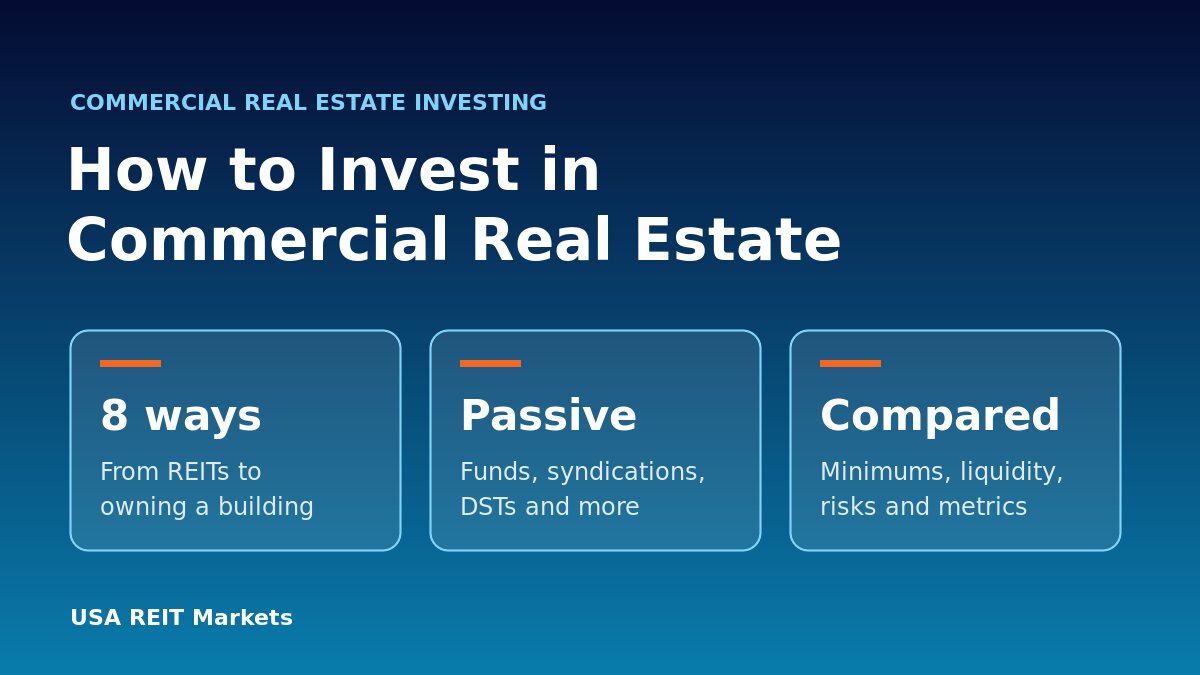
Multifamily can suit investors who want income from real property, are comfortable with a multi-year hold, and either have the time to run a building or are willing to choose a sponsor carefully. If you want daily liquidity and small amounts, listed apartment REITs are simpler. If you want control and are ready to manage, direct ownership gives you the most say. If you're selling a rental property and want to defer tax without becoming a landlord again, a DST or another 1031 replacement property may fit. For a wider view of the options beyond apartments, read how to invest in commercial real estate.
Frequently asked questions
What is considered multifamily real estate?
Any residential property with two or more separate units, from a duplex to a large apartment community. Properties with five or more units are generally financed and valued as commercial real estate.
How much money do you need to invest in multifamily?
It depends on the route. Buying a small building usually needs a down payment plus reserves. Syndications and DSTs often set minimums in the tens of thousands of dollars and may require accredited investor status. Listed apartment REIT shares can be bought for the price of one share.
Is multifamily a good investment?
It can be, but results vary widely by market, purchase price, loan terms and management. Multifamily has spread-out tenant income and deep lending markets, but it also faces interest rate, supply, cost and regulatory risks.
What is a good cap rate for multifamily?
There isn't one right number. Cap rates depend on the market, the building's age and condition, and interest rates. A higher cap rate usually means more income for the price but often more risk. Compare a property's cap rate with recent sales of similar buildings in the same area.
Can I invest in multifamily passively?
Yes. Syndications, private funds, REITs and DSTs all let you own a share of apartment properties while a sponsor or manager runs them.
Can I use a 1031 exchange to buy into multifamily?
Yes. Apartment buildings and many DST interests can qualify as like-kind replacement property. REIT shares don't qualify directly, although a 721 exchange can lead to REIT operating partnership units.
Next steps
Run the numbers on any apartment building with the cap rate calculator, read how real estate syndication works and what a DST is, or browse current offerings on the USA REIT marketplace and commercial real estate funds. Questions? Contact our team.
This article is for general information only and is not investment, tax or legal advice. Private real estate investments are speculative, illiquid and may result in the loss of your entire investment. Many private offerings are available only to accredited investors. Past performance does not guarantee future results. Consult your own advisers before investing.
Latest Articles