
Opportunity Zone Funds: How They Work and What Changes in 2027
Short answer: An opportunity zone fund, or qualified opportunity fund (QOF), is an investment fund that puts at least 90% of its assets into businesses and real estate in designated low-income areas called qualified opportunity zones. If you invest a capital gain in a QOF within 180 days, you can defer tax on that gain, and if you hold the investment for at least 10 years, any growth in the QOF investment itself can be tax-free.
The program is changing right now:
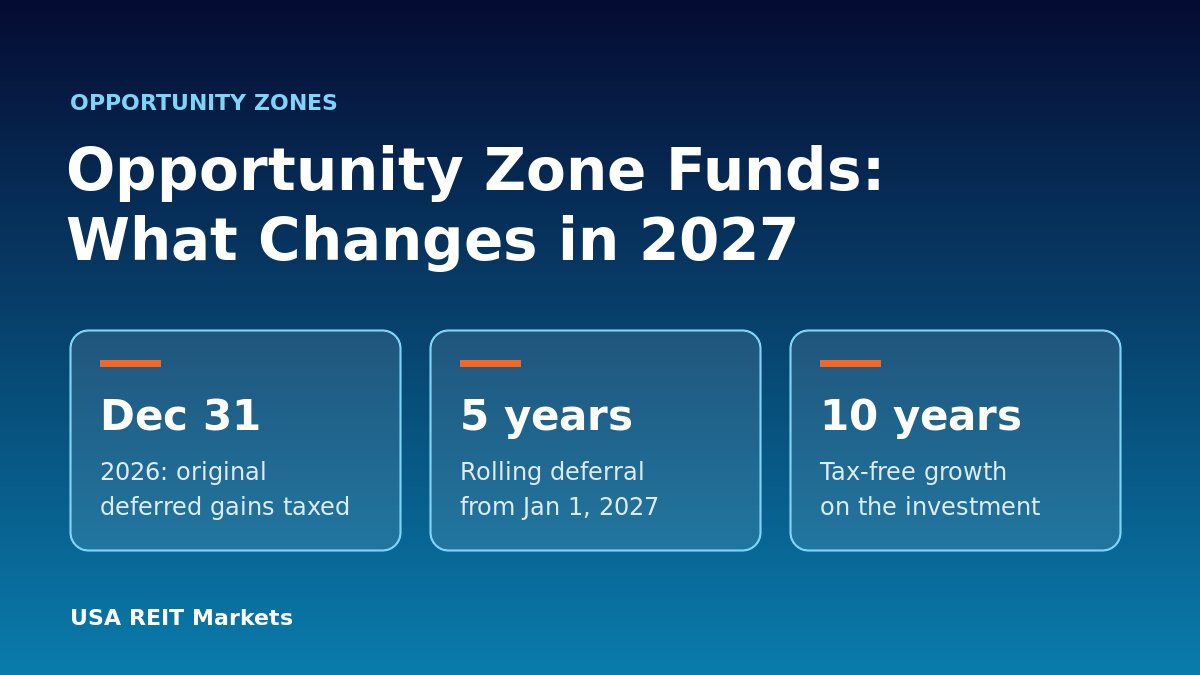
- December 31, 2026: gains deferred under the original 2017 program are taxed. Investors who still hold their QOF interest generally include the deferred gain in their 2026 income, even if they don't sell.
- January 1, 2027: "Opportunity Zone 2.0" begins. The program is now permanent, and new investments get a rolling five-year deferral, a 10% basis increase after five years (30% for rural funds), and the 10-year tax-free growth benefit.
- A new zone map of 6,576 census tracts, announced by Treasury on November 5, 2026, takes effect on January 1, 2027, for ten years.
How do opportunity zones work?
Opportunity zones were created by the 2017 Tax Cuts and Jobs Act to steer private investment into low-income communities. Governors nominate eligible census tracts, and Treasury certifies them as qualified opportunity zones.
Investors don't buy property in a zone directly to get the tax benefits. Instead:
- You realize a capital gain, for example by selling stock, a business, crypto or real estate.
- Within 180 days, you invest the gain (not the whole sale price) in a qualified opportunity fund.
- The QOF invests in the zone, by buying and substantially improving property, building new property, or investing in operating businesses there.
- You make an election on your tax return (Form 8949) to defer the gain, and the fund and investor file Form 8996 and Form 8997 each year.
- You hold the investment to earn the tax benefits.
A QOF is a corporation or partnership that self-certifies with the IRS on Form 8996 and must hold at least 90% of its assets in qualified opportunity zone property, tested twice a year. Real estate QOFs usually have to build new or substantially improve existing buildings: roughly, invest more than the building's purchase price (excluding land) within 30 months. Under the 2025 law, the threshold for rural property is 50% of the purchase price.
Opportunity zone tax benefits
There are three benefits, and how they work depends on when you invest.
- Deferral: tax on the capital gain you invest is postponed.
- Partial reduction: after five years, part of the deferred gain is forgiven through a basis increase.
- Tax-free growth: if you hold the QOF investment for at least 10 years, you can elect to step its basis up to fair market value when you sell, so the appreciation on the QOF investment isn't taxed.
The third benefit is the big one. The deferral and reduction apply to the gain you already had; the 10-year exclusion applies to everything the QOF investment earns afterward.
The original program vs Opportunity Zone 2.0
| Original program (investments through Dec. 31, 2026) | Opportunity Zone 2.0 (investments from Jan. 1, 2027) | |
|---|---|---|
| How long the gain is deferred | Until you sell or Dec. 31, 2026, whichever comes first | Until you sell or the fifth anniversary of your investment, whichever comes first |
| Basis increase on the deferred gain | 10% after 5 years, 15% after 7, but only for investments made early enough to reach those dates by the end of 2026 | 10% after 5 years; 30% for a qualified rural opportunity fund |
| Tax-free growth | After 10 years, for sales through 2047 | After 10 years, with the basis step-up available for up to 30 years |
| Zone map | 2018 designations | New designations effective Jan. 1, 2027, for 10 years |
| Program end date | Temporary | Permanent, with new zone designations every 10 years |
Under 2.0 the rules are simpler and predictable: every investment gets the same five-year clock, whenever it's made. Congress also tightened the definition of an eligible low-income community for the new map and added reporting requirements, with penalties, for funds.
The December 31, 2026 deadline
If you invested a gain in a QOF under the original program and still hold the investment on December 31, 2026, the deferred gain is generally taxed in 2026, even though you haven't sold. In broad terms, you include the smaller of the remaining deferred gain or the QOF interest's fair market value on that date, minus your basis. Investors who held five or seven years by then get the 10% or 15% basis increase.
What that means in practice:
- Plan for the tax bill. The tax is due with your 2026 return in spring 2027, but you may receive no cash from the fund to pay it. Some investors will need estimated tax payments.
- You can't re-defer it. The gain recognized on December 31, 2026, can't be rolled into a new QOF.
- Keep holding for the 10-year benefit. Recognizing the deferred gain doesn't end the tax-free growth benefit: if you reach 10 years, the QOF investment's appreciation can still be excluded.
- Fair market value matters. If the QOF interest is worth less than the deferred gain, a supportable valuation can reduce the amount taxed.
Gains realized in late 2026: an investment made under the original rules late in the year would see its deferred gain taxed almost immediately, on December 31, 2026, though it would still qualify for the 10-year benefit. How the 180-day window works across the switch to the new rules is technical, and the IRS has been issuing transition guidance. Talk to a tax adviser before investing a late-2026 gain.
Opportunity zone vs 1031 exchange
Both defer capital gains tax on real estate, but they work very differently.
| Opportunity zone fund | 1031 exchange | |
|---|---|---|
| Which gains qualify | Any capital gain: stocks, a business, crypto, real estate | Only gain from selling investment or business real property |
| What you must reinvest | Only the gain | The full sale proceeds (and replace the debt) to defer all the tax |
| Deadline | Invest within 180 days | Identify in 45 days, close in 180 |
| What you invest in | A QOF investing in a designated zone | Like-kind US real property, including DST interests |
| How long the tax is deferred | Up to 5 years (from 2027), then a 10% or 30% reduction | Indefinitely, through further exchanges; the basis can step up at death |
| Tax on future growth | None after 10 years | Deferred, not forgiven, unless held until death |
| Where | Low-income census tracts only | Anywhere in the US |
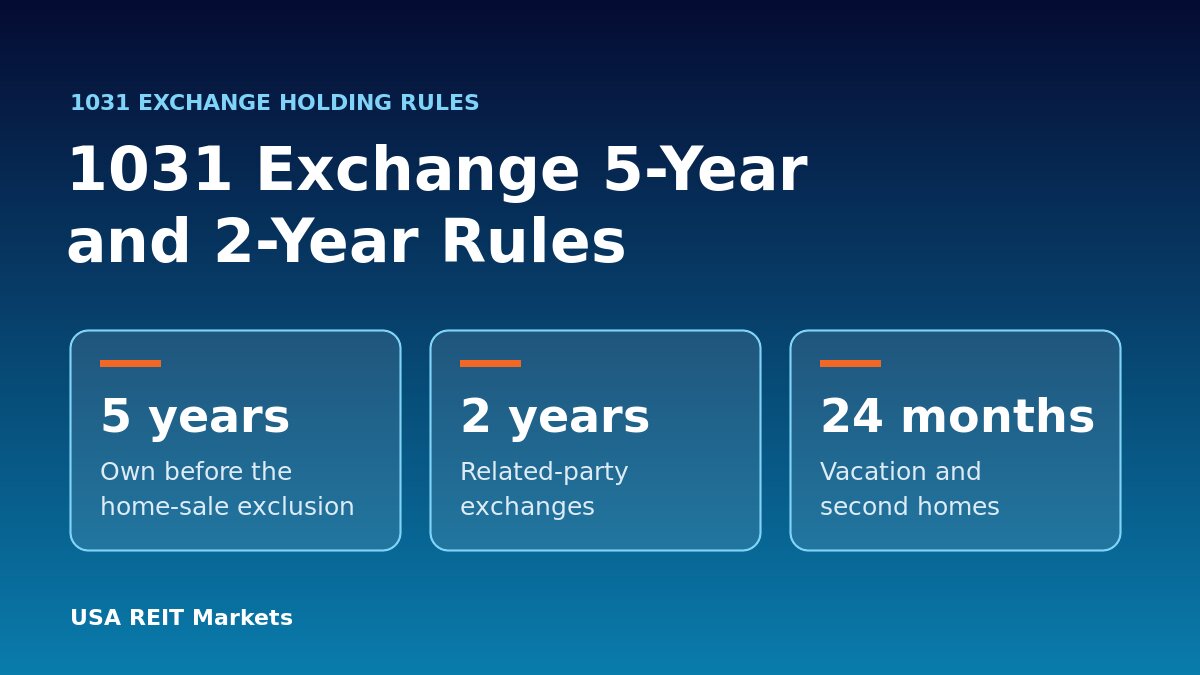
A 1031 exchange keeps your whole investment working and lets you defer indefinitely, but only for real estate sold and bought. An opportunity zone fund lets you take your original capital out and invest only the gain, accepts gains from any asset, and can make future growth tax-free, in return for a long hold in a specific area.
Read our 1031 exchange rules guide, the 1031 exchange timeline, and our guide to Delaware statutory trusts, or compare options on our 1031 exchange page.
How to invest in an opportunity zone fund
- Confirm your gain qualifies. Capital gains from sales to unrelated parties qualify; your tax adviser can confirm the amount and the 180-day start date.
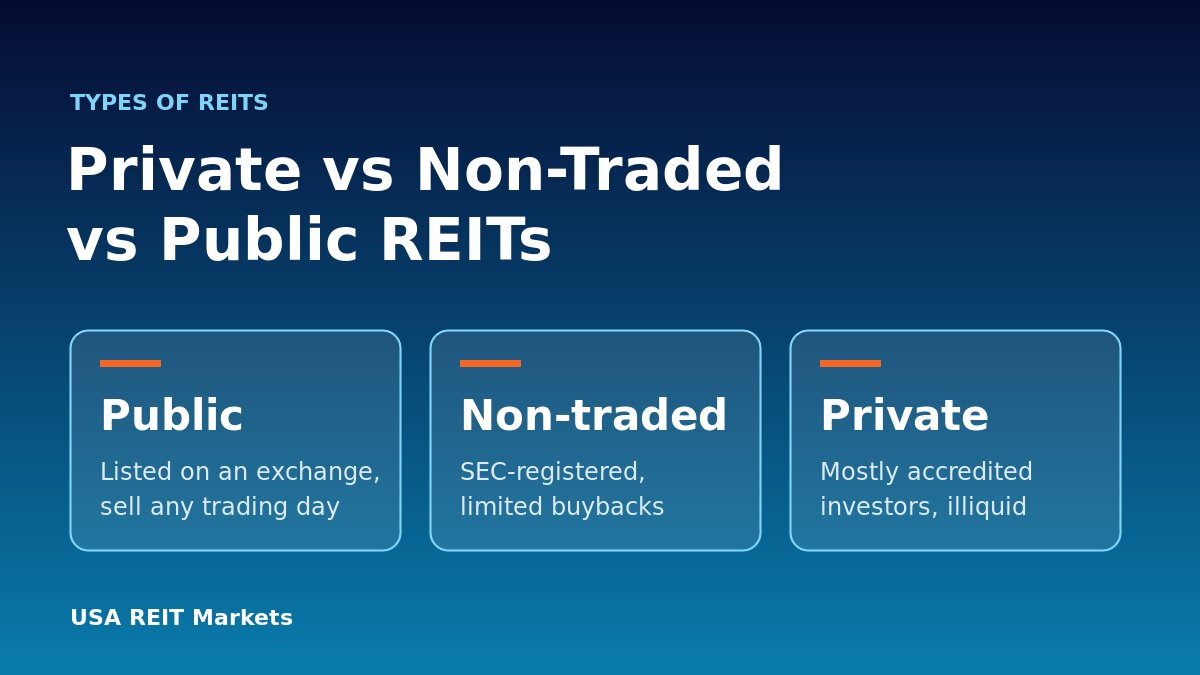
- Choose a fund. Most QOFs are private offerings for accredited investors, structured like real estate funds or syndications. Some focus on one development; others hold several projects.
- Do your due diligence. The tax benefits don't fix a bad investment. Look at the sponsor's development experience, the projects and their locations, the debt, the fees and how the fund plans to stay compliant with the 90% test.
- Invest within 180 days and make the deferral election on your tax return.
- Plan for a 10-year hold. The biggest benefit requires it, and QOF interests are illiquid.
Risks of opportunity zone funds
- Illiquidity: to get the 10-year benefit you need to hold for a decade, and there's usually no way to sell early.
- Development and location risk: many QOFs build new projects in areas that haven't attracted much investment, which carries real construction, leasing and market risk.
- Compliance risk: if the fund fails the 90% asset test or other rules, it can owe penalties and investors can lose benefits.
- Tax-law and timing risk: the rules have changed once already, and much of the 2.0 guidance is still being written.
- Phantom income: the deferred gain can be taxed while your money is still tied up in the fund.
FAQ
What is a qualified opportunity fund (QOF)?
An investment fund, set up as a corporation or partnership, that self-certifies with the IRS and holds at least 90% of its assets in qualified opportunity zone property: businesses and real estate in designated low-income census tracts.
What are the tax benefits of opportunity zones?
Deferral of tax on the capital gain you invest, a basis increase of 10% (30% for rural funds) after five years for investments from 2027, and no tax on the QOF investment's appreciation if you hold it for at least 10 years.
What is Opportunity Zone 2.0?
The permanent version of the program created by the 2025 tax law. It applies to investments made on or after January 1, 2027, with a rolling five-year deferral, a 10% or 30% basis increase, new zone designations every 10 years and new reporting rules.
What happens to opportunity zone gains on December 31, 2026?
Gains deferred under the original program are generally taxed in 2026 if you still hold your QOF interest on that date, based on the smaller of the deferred gain or the investment's fair market value. The tax is due with your 2026 return.
What is the opportunity zone 10-year rule?
If you hold a QOF investment for at least 10 years, you can elect to increase its basis to fair market value when you sell, so the appreciation on that investment is tax-free.
Is an opportunity zone better than a 1031 exchange?
Neither is better in general. A 1031 exchange defers tax indefinitely on real estate but requires reinvesting all the proceeds; an opportunity zone fund takes gains from any asset, requires reinvesting only the gain and can make future growth tax-free, but requires a long hold in a designated area.
Do I need to be an accredited investor?
Most opportunity zone funds are private offerings limited to accredited investors, although some are offered more widely.
Next steps
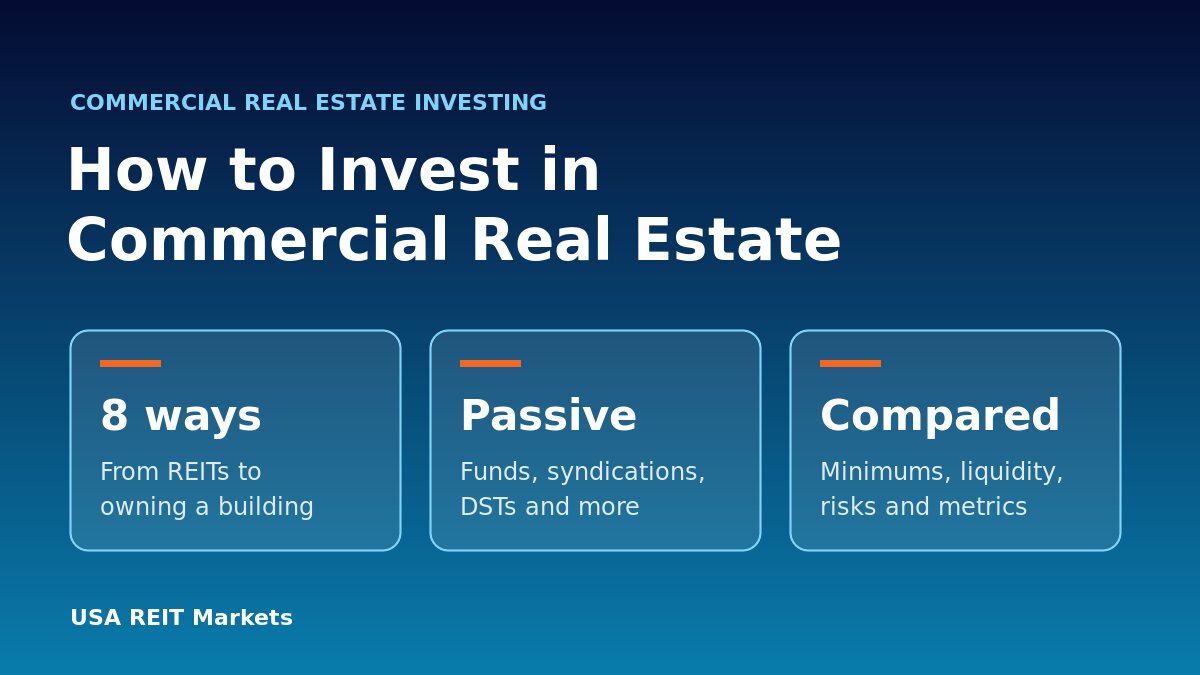
See how to invest in commercial real estate for every way to invest, browse commercial real estate funds and the USA REIT marketplace, or contact our team.
This article is for general information only and is not tax, legal or investment advice, or an offer to sell any security. Opportunity zone rules are complex, parts of the 2027 rules still await IRS guidance, and the outcome depends on your situation. Opportunity zone funds are illiquid, carry significant risk and are generally available only to accredited investors. Speak with a tax adviser before investing.
Latest Articles