
What Is Tokenized Real Estate? How Real Estate Tokens Work
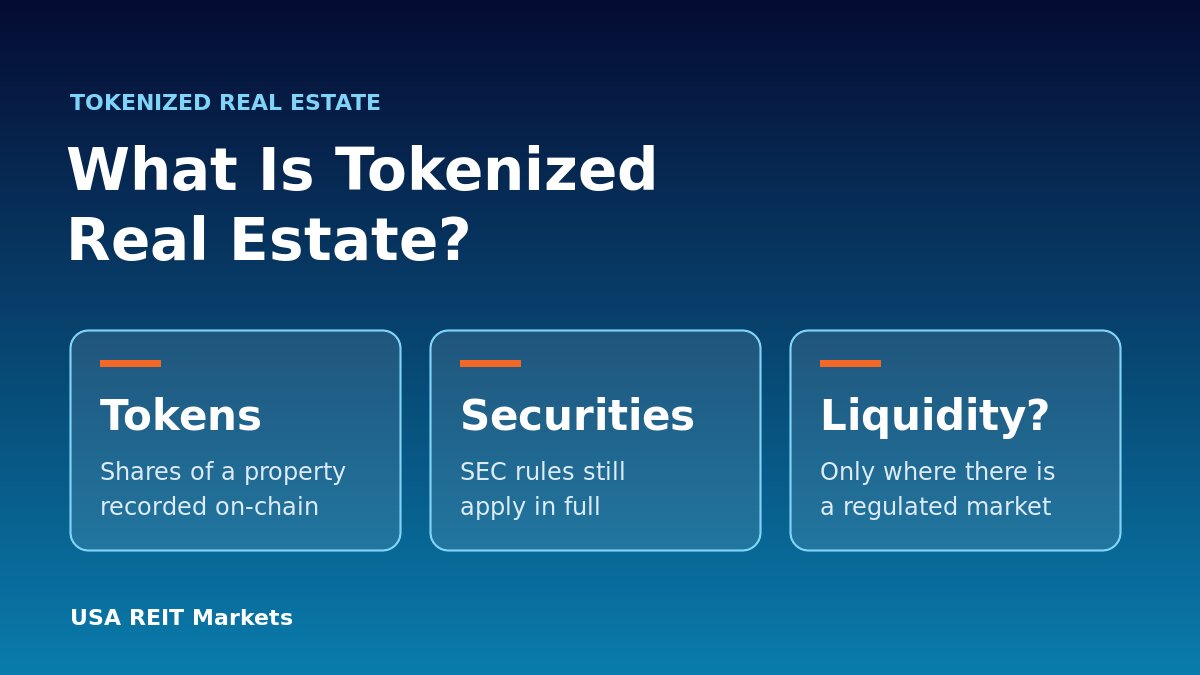
Short answer: Tokenized real estate means ownership interests in real estate, usually shares in a company or fund that owns a property, are issued and recorded as digital tokens on a blockchain instead of only in a traditional ledger. Each token represents a slice of ownership, so a building can be divided among many investors, and the tokens can carry rules about who may hold or transfer them.
In the US, real estate tokens offered to investors are almost always securities. In January 2026 the SEC's staff confirmed that tokenized securities are still securities: putting them on a blockchain doesn't change the registration rules, the exemptions, or investors' rights.
How does real estate tokenization work?
A typical tokenized real estate offering in the US has six steps:
- The property goes into a legal entity. A sponsor places the property in a special purpose vehicle (SPV), usually an LLC or a trust. The SPV holds the deed, which stays recorded in the county land records as usual.
- The sponsor makes a securities offering. Shares or membership interests in the SPV are offered under a securities law path: most often Regulation D (accredited investors), Regulation A+ (open to the public, with limits), or a full SEC registration.
- The interests are issued as tokens. Each token represents a set number of shares in the SPV. A smart contract and, usually, a registered transfer agent keep the ownership record.
- Investors are verified. Investors complete identity checks (know-your-customer and anti-money-laundering rules) and, for Regulation D offerings, accreditation checks. The token can be programmed so only verified investors' wallets or accounts can hold it.
- Income is paid out. Rent, after expenses, flows to the SPV, which pays distributions to token holders, in dollars or sometimes in stablecoins.
- Tokens may be traded. Where it's allowed, investors can sell tokens to other eligible investors through an SEC-registered broker-dealer or alternative trading system (ATS), subject to holding periods and transfer restrictions.
In other words, the token is a digital wrapper around an ordinary real estate security. You usually own a share of the company that owns the building, not the deed itself.
What do tokens add?
Supporters point to several potential advantages:
- Smaller minimums: dividing ownership into many tokens can make it practical to offer smaller investment amounts.
- Faster, cheaper administration: ownership records, investor checks and distributions can be automated.
- Transparency: the ownership record on a blockchain is shared and hard to alter.
- Built-in compliance: transfer rules, such as accredited-only or a holding period, can be coded into the token.
- Potential liquidity: tokens can be easier to transfer than traditional private real estate interests, if a regulated market for them exists.
That last point is the one investors most often misunderstand. Tokenization makes a security easier to transfer; it doesn't guarantee that anyone wants to buy it. Many tokenized real estate securities still trade rarely, if at all.
Tokenized real estate and the SEC
If a real estate token gives you a share of a property's income or value, it's a security under US law, and the usual rules apply.
- Tokenized securities are still securities. In a January 2026 statement, staff in three SEC divisions said that the format in which a security is issued, on-chain or off-chain, doesn't change how the federal securities laws apply. Offers and sales must be registered or fit an exemption.
- The offering path sets who can invest. Regulation D offerings are generally limited to accredited investors. Regulation A+ offerings can be sold to the general public, with investment limits for non-accredited investors in larger (Tier 2) offerings. See our guide to Reg A offerings.
- Resale restrictions still apply. Securities bought in a Regulation D offering are "restricted securities": as a rule, you can't freely resell them for at least a year, and then only under the conditions of SEC Rule 144 or another exemption. A token can't be traded around those rules.
- Trading has to happen on regulated venues. Secondary trading of security tokens goes through SEC-registered broker-dealers and alternative trading systems (ATSs) that are members of FINRA, not ordinary crypto exchanges.
- Structure matters. The SEC staff distinguish tokens issued by (or for) the issuer itself from tokens created by third parties that only track a security. A third-party token may give you weaker rights, or none, against the property owner. Read exactly what your token represents.
For more on how compliance works in practice, see SEC compliance in the digital age.
Tokenized vs fractional real estate
"Fractional real estate" just means owning part of a property alongside other investors. It has existed for decades, through LLCs, limited partnerships, REITs, Delaware statutory trusts and online offerings, with no blockchain involved.
Tokenization is one way of recording and transferring fractional ownership. So:
- All tokenized real estate is fractional ownership, but most fractional ownership isn't tokenized.
- The investment is the same either way: the property, the sponsor, the debt, the fees and the legal rights matter far more than whether ownership is recorded on a blockchain.
- Fractional home ownership is different again. Co-ownership of a vacation home you can use is mainly a lifestyle purchase. Fractional investment real estate is about income and growth, with no personal use.
Tokenized real estate vs REITs vs traditional private real estate
| Tokenized real estate | Publicly traded REIT | Traditional private real estate (syndication, fund, DST) | |
|---|---|---|---|
| What you own | Tokens representing shares of an entity that owns one or more properties | Shares in a listed company owning many properties | LLC, partnership or trust interests |
| Ownership record | Blockchain plus transfer agent | Brokerage and transfer agent | Sponsor's or transfer agent's books |
| Who can invest | Depends on the offering: Reg D accredited only; Reg A+ open to all | Anyone | Mostly accredited investors |
| Selling early | Possible on a regulated ATS where one exists, after any holding period; trading is often thin | Any trading day | Rarely possible before the property is sold |
| Diversification | Often a single property | Broad | Single property or a portfolio |
| Regulation | Same securities laws, plus custody and technology rules | SEC-registered and exchange-listed | Mostly exempt private offerings |
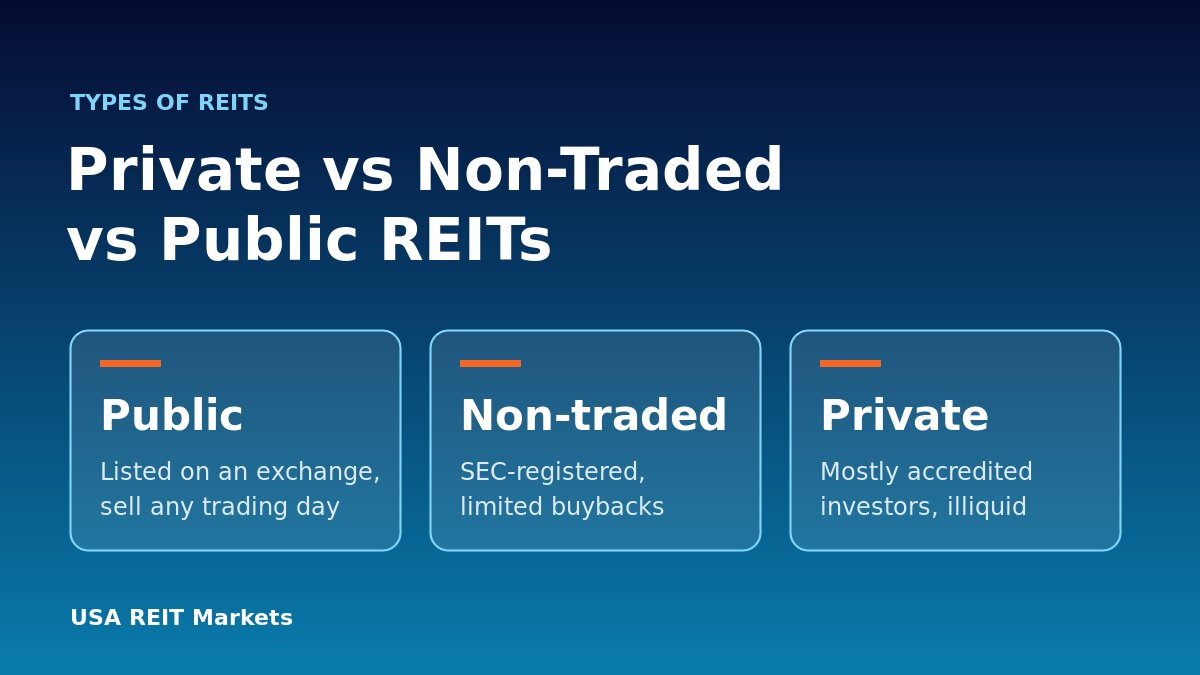
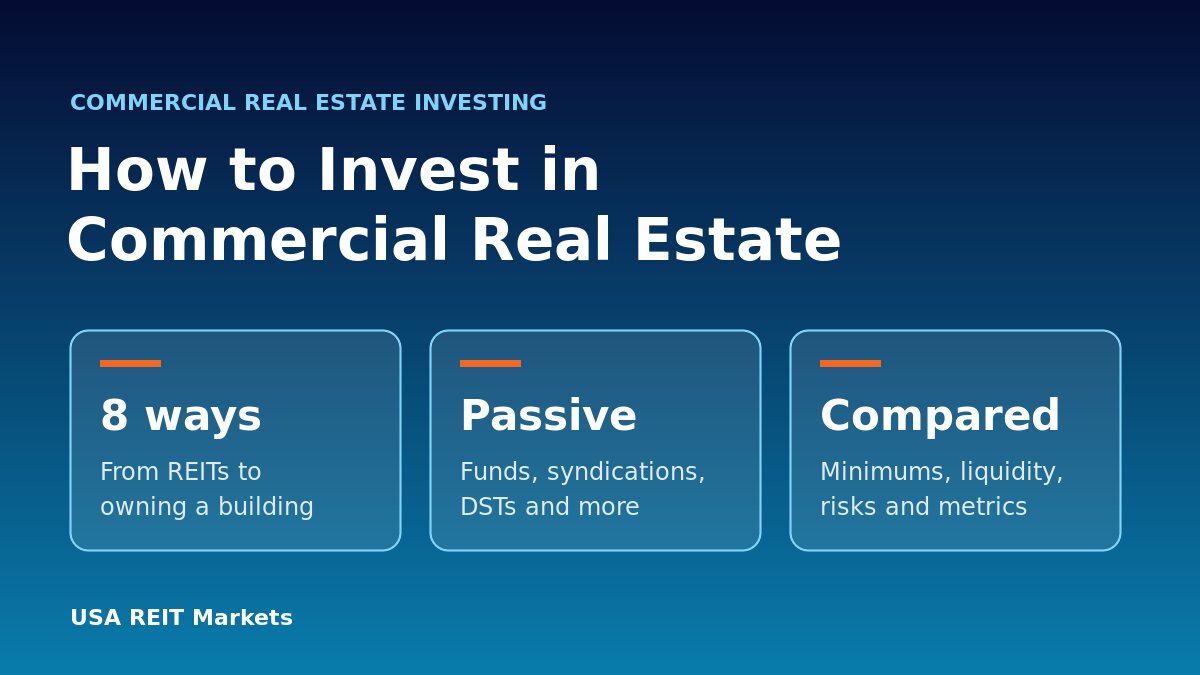
For the full range of options, see how to invest in commercial real estate and our comparison of private, non-traded and public REITs.
Risks of tokenized real estate
- Property risk: a token is only as good as the building, the tenants, the debt and the sponsor behind it. Technology doesn't make a weak deal better.
- Liquidity risk: trading may be thin or non-existent, so you may not be able to sell at a fair price, or at all.
- Rights risk: check whether the token is issued by the property's owner or by a third party, and what claim it gives you if something goes wrong.
- Platform and custody risk: if the platform, transfer agent or custodian fails, or you lose access to a self-custodied wallet, you may struggle to prove or recover ownership.
- Technology risk: smart contract bugs, hacks and blockchain outages.
- Regulatory risk: the rules for tokenized securities are still developing, and offerings that cut corners can be shut down.
- Fees: tokenization adds platform and technology costs on top of normal real estate fees.
How to invest in tokenized real estate
- Confirm it's a regulated offering. Look for an offering under Regulation D, Regulation A+ or SEC registration, sold through or with an SEC-registered broker-dealer. Be wary of real estate tokens sold on unregistered crypto exchanges.
- Read the offering documents. Understand the property, the business plan, the debt, the fees and the projected hold period, exactly as you would for any private real estate deal.
- Find out what the token represents. Shares in the entity that owns the property, a debt claim, or a third-party token that only tracks the price?
- Check how you'd sell. Which ATS, if any, trades it; how long you must hold first; and how active trading actually is.
- Check custody. Who holds the tokens, how ownership is recorded with the transfer agent, and what happens if you lose access.
- Size the investment. Treat it as illiquid, and keep it to an amount you can leave invested for years.
For property owners and sponsors
Tokenization is also a tool for raising capital. Sponsors can offer tokenized interests to a wider investor base, automate investor administration and distributions, and give investors a possible path to trade on a regulated venue. Owners of commercial property can use tokenized offerings to raise capital against their equity without selling the whole building.
Learn more about tokenized real estate on USA REIT Markets and how owners can unlock trapped capital. For the bigger picture, read about private real estate's liquidity challenge and practical uses of blockchain in real estate.
FAQ
What is tokenized real estate?
Real estate ownership interests, usually shares of a company or fund that owns a property, issued and recorded as digital tokens on a blockchain. Each token represents a fraction of the ownership.
Is tokenized real estate legal in the US?
Yes, when it's offered in line with the securities laws: registered with the SEC or sold under an exemption such as Regulation D or Regulation A+, and traded only through regulated broker-dealers or alternative trading systems.
Do I own the property when I buy a real estate token?
Usually not directly. You typically own a share of the LLC or trust that holds the deed, which gives you a share of its income and value under the offering documents.
Can I sell real estate tokens anytime?
Not necessarily. Tokens from Regulation D offerings generally can't be resold for at least a year, trading must go through a regulated venue, and there may be few buyers.
Is tokenized real estate the same as fractional real estate?
Tokenization is one way to record fractional ownership. Fractional real estate has long been offered through LLCs, funds, REITs and DSTs without any blockchain.
How is tokenized real estate taxed?
Generally the same way as the underlying investment. If the token represents an LLC interest taxed as a partnership, you'll usually receive a Schedule K-1; if it represents REIT shares, distributions are taxed as REIT dividends. Ask a tax adviser.
Do I need to be an accredited investor?
For Regulation D offerings, yes. Regulation A+ tokenized offerings are open to non-accredited investors, with limits on how much they can invest.
Next steps
Read how to invest in commercial real estate for every way to invest, browse current offerings on the USA REIT marketplace, or contact our team with questions about tokenized offerings.
This article is for general information only and is not investment, tax or legal advice, or an offer to sell any security. Tokenized real estate securities carry the risks of real estate investing plus technology, custody and liquidity risks. They may be illiquid, and many are available only to accredited investors. Read the offering documents and speak with a financial adviser before investing.
Latest Articles