
Delaware Statutory Trust (DST) Investments: 1031 Guide
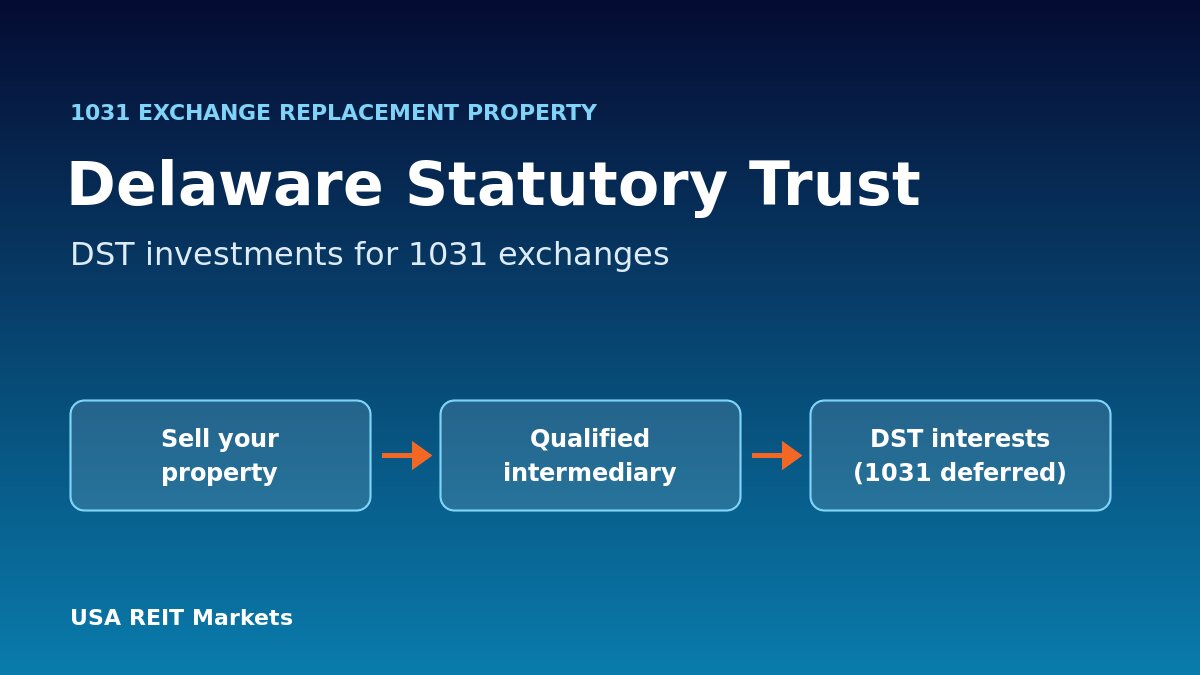
Short answer: A Delaware statutory trust (DST) is a legal entity, formed under Delaware law, that holds title to real estate for a group of investors. Each investor owns a fractional beneficial interest in the trust. Under IRS Revenue Ruling 2004-86, a properly structured DST interest counts as an interest in real estate for a 1031 exchange, so you can sell an investment property and defer the capital gains tax by buying DST interests instead of another building. The trade-off is control: you become a passive owner, with no say in how the property is run, and your money is usually tied up for years.
How a DST works
- A sponsor buys the property. A real estate company (the sponsor) acquires one or more properties, often apartments, industrial buildings, medical offices or net-leased retail, and arranges any financing in advance.
- The property goes into a DST. The sponsor forms the trust and places the property in it. A trustee, usually affiliated with the sponsor, manages it.
- Investors buy beneficial interests. DST interests are sold as private placement securities, usually only to accredited investors, through broker-dealers and their registered representatives. Minimum investments are set by each sponsor.
- Income is passed through. You receive your share of the rental income, typically as monthly distributions, and report your share of income and expenses, including depreciation, on your own tax return.
- The property is sold. After the hold period planned by the sponsor (often several years), the DST sells the property and pays out the proceeds. Some DSTs instead plan to convert into a REIT through a 721 exchange.
Why DSTs are popular in 1031 exchanges
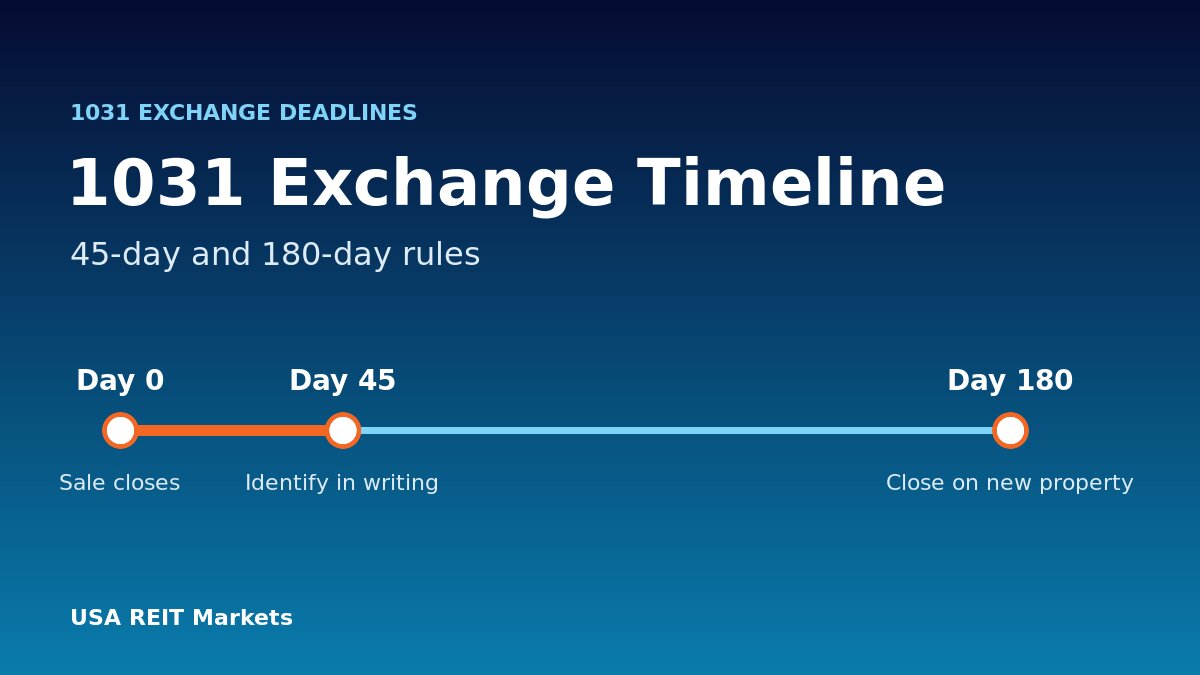
- They help you meet the deadlines. A 1031 exchange gives you 45 days to identify replacement property and 180 days to close (see our 1031 exchange timeline). DST interests are usually available to buy within days, so many investors name one as a backup identification in case a property deal falls through.
- Precise amounts. You can buy DST interests in the exact amount you need to reinvest, which helps avoid leftover cash ("boot") that would be taxed.
- Debt replacement. To defer all the tax, you generally need to replace the debt you paid off on the old property. Many DSTs carry pre-arranged, non-recourse loans, and your share of that debt can count toward the replacement.
- No more landlord duties. The sponsor handles tenants, repairs and leasing.
- Access to larger properties. A DST can own buildings that most individual investors couldn't buy on their own, and you can spread your exchange across several DSTs.
The IRS rules that limit what a DST can do
For a DST interest to count as real estate rather than a partnership interest, Revenue Ruling 2004-86 requires the trust to stay passive. The trustee generally cannot:
- Accept new capital from investors once the offering has closed.
- Renegotiate the existing loan or take out new loans.
- Sell the property and reinvest the proceeds in new property.
- Renegotiate existing leases or sign new leases, except in narrow cases such as a tenant's bankruptcy or insolvency.
- Make capital improvements beyond normal repairs and maintenance, minor non-structural improvements, and work required by law.
- Invest cash between distributions in anything other than short-term debt obligations.
- Keep cash beyond reasonable reserves: the rest must be distributed to investors on a regular basis.
These limits, often called the "seven deadly sins", are why DSTs usually hold properties with long leases and predictable income, such as properties leased to a single tenant on a long net lease, or stabilized apartments. They also make DSTs inflexible. If a property needs new financing or a major re-lease, the trust can't simply adapt. Many DST agreements allow a conversion into an LLC in that situation. That keeps the property going, but your interest generally becomes a partnership interest that can't be 1031 exchanged later.
DST vs. owning a property directly
| DST investment | Owning a replacement property | |
|---|---|---|
| Qualifies for a 1031 exchange | Yes, if structured under Rev. Rul. 2004-86 | Yes |
| Management | Sponsor and trustee | You or your property manager |
| Control over decisions | None | Full |
| Time to buy | Usually days | Weeks to months (search, due diligence, financing) |
| Financing | Arranged by the sponsor, non-recourse to you | You arrange it, often with personal guarantees |
| Diversification | Can split money across several DSTs and property types | Usually one or a few properties |
| Liquidity | Very limited until the sponsor sells | You decide when to sell |
| Costs | Upfront and ongoing sponsor fees | Transaction costs, plus your time |
Costs to look for
DSTs carry several layers of fees, all set out in the private placement memorandum (PPM). Common ones are selling commissions, offering and organization costs, acquisition fees, financing fees, an annual asset management fee and a share of the profit on sale. Together, the upfront costs can take a meaningful share of every dollar you invest, so compare the total "load" and the property's purchase price against independent valuations before you commit.
Risks of DST investments
- Illiquidity. There's no public market for DST interests. Expect to hold until the sponsor sells, which can be years, and plan accordingly.
- No control. You can't vote on a sale, a refinance or a new lease.
- Concentration. Many DSTs own a single property or depend on a single tenant. If that tenant leaves, income can fall sharply.
- Leverage. Debt magnifies losses as well as gains, and a loan maturing in a bad market can force difficult choices.
- Sponsor risk. Results depend on the sponsor's skill, alignment and financial strength. Check its track record across full cycles, including deals that went badly.
- Inflexibility. The IRS restrictions above can stop the trust from responding to problems.
- Market risk. Property values and rents can fall, and you can lose part or all of your investment. Distributions aren't guaranteed.
How investors exit a DST
When the DST sells its property, you generally have four choices:
- Do another 1031 exchange into a new property or another DST, and keep deferring the tax.
- Take the cash and pay the deferred capital gains tax and depreciation recapture.
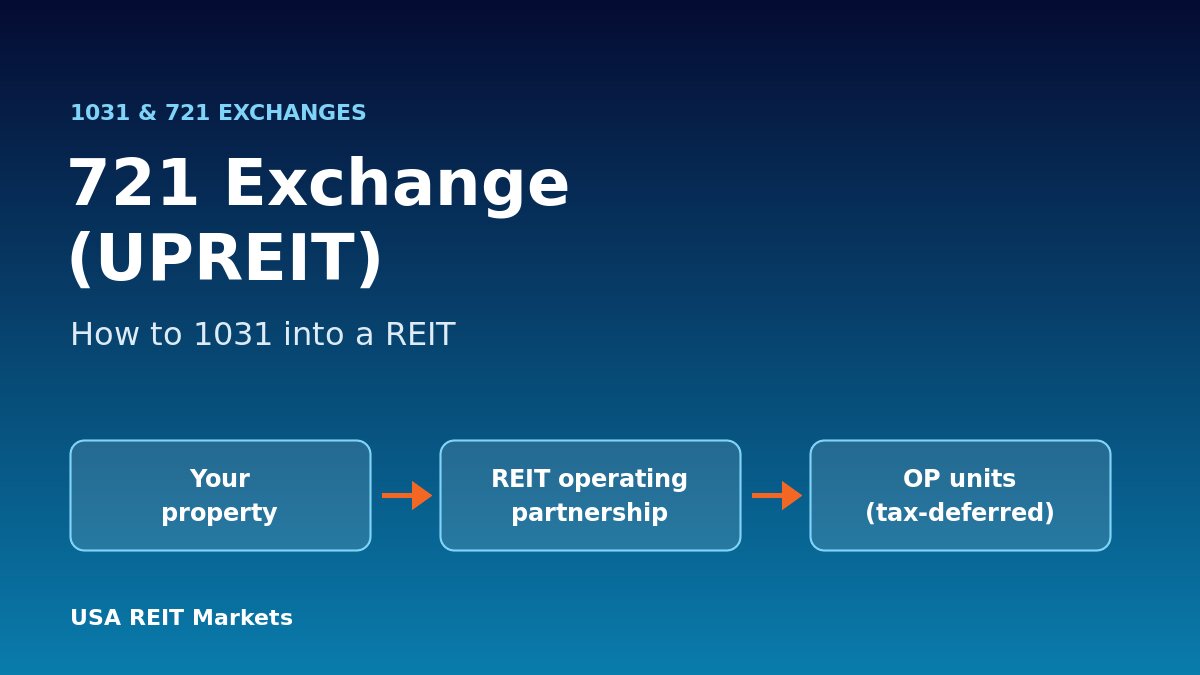
- Convert to REIT units through a 721 exchange, if the DST offers it. Read our guide to the 721 exchange (UPREIT): it ends your ability to do future 1031 exchanges.
- Hold until death. Under current law, heirs generally receive a stepped-up tax basis, which can eliminate the deferred gain. Confirm this with your estate adviser.
Questions to ask before you invest in a DST
- What property, tenants and lease terms does the DST own, and how long are the leases?
- How much debt is there, at what rate, and when does the loan mature?
- What are all the fees, and what is the total load?
- What is the sponsor's track record, including sold and troubled deals?
- What is the planned hold period and exit strategy? Is there a mandatory 721 conversion?
- How big are the reserves, and what happens if the property needs capital?
- Does the investment fit your 1031 timeline, debt-replacement needs and overall diversification?
FAQ
What is a Delaware statutory trust?
A legal entity formed under Delaware's Statutory Trust Act that holds title to assets, here real estate, for the benefit of its investors. Each investor owns a fractional beneficial interest.
Can you use a DST in a 1031 exchange?
Yes. Under Revenue Ruling 2004-86, a properly structured DST interest is treated as a direct interest in real estate, so it can be the replacement property in a 1031 exchange. The normal 45-day and 180-day deadlines still apply.
Who can invest in a DST?
DST interests are usually offered as private placements, generally only to accredited investors. Each offering sets its own minimum investment.
How are DSTs taxed?
For federal income tax, investors are generally treated as owning their share of the property directly. You report your share of rental income and expenses, including depreciation, and you may also need to file in the state where the property is located.
What are the "seven deadly sins" of a DST?
The seven restrictions from Revenue Ruling 2004-86 that keep a DST passive: no new capital, no new or renegotiated loans, no reinvestment of sale proceeds, no new or renegotiated leases (with narrow exceptions), only limited capital improvements, cash held only in short-term debt, and regular distribution of cash.
How long do you hold a DST?
It's set by the sponsor's plan for the property, often several years. You usually can't sell early, so treat it as a long-term, illiquid investment.
What's the difference between a DST and a REIT?
A DST interest is a fractional interest in specific real estate and qualifies for a 1031 exchange. REIT shares are securities in a company that owns many properties and don't qualify for a 1031 exchange. A 721 exchange is the usual bridge from a DST into a REIT.
Next steps
If you're planning a 1031 exchange, start with the 1031 exchange rules and the timeline, then compare your options on our 1031 exchange page. You can browse current opportunities on the USA REIT marketplace or contact our team.
This article is for general information only and is not tax, legal or investment advice, or an offer to sell any security. DST interests are securities offered by private placement memorandum, generally only to accredited investors. They're illiquid, carry significant risk including the possible loss of your entire investment, and past performance doesn't guarantee future results. Talk to a qualified tax adviser, attorney and financial professional before investing.
Latest Articles