
1031 Exchange Timeline: 45-Day and 180-Day Rules
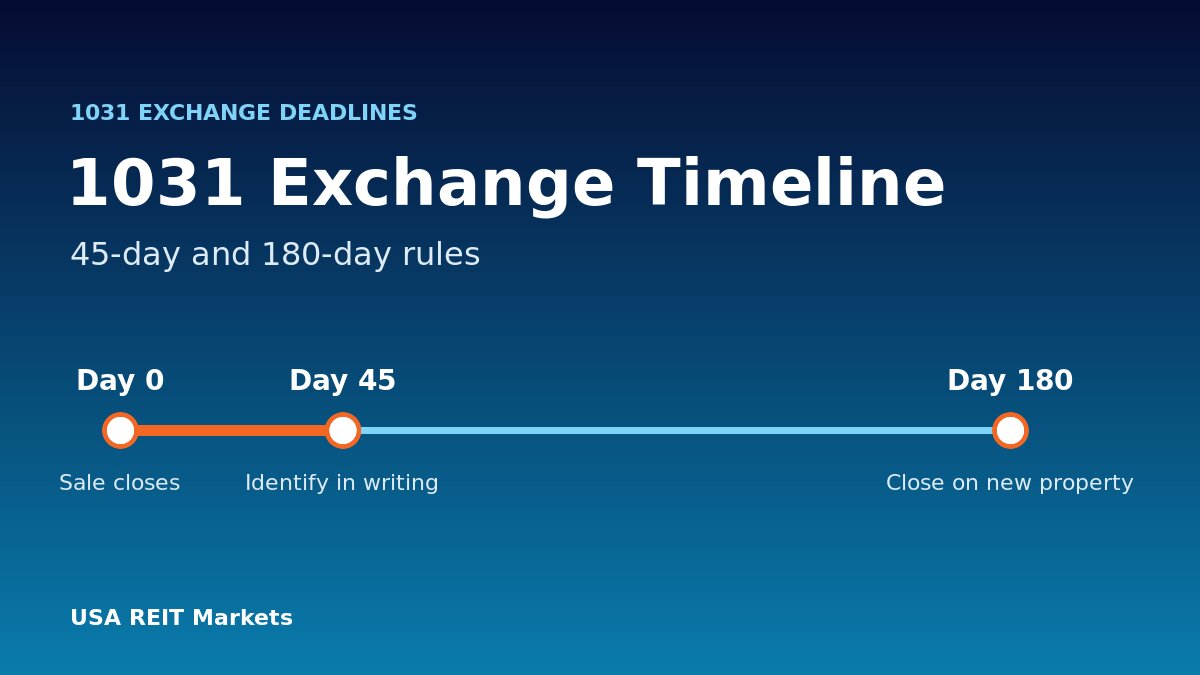
Short answer: A 1031 exchange runs on two deadlines that both start the day you close the sale of your old property. You have 45 days to identify replacement property in writing, and 180 days to close on it. The 180-day deadline is cut short if your tax return for that year is due first, unless you file an extension. Both are calendar days. Weekends and holidays count, and the IRS doesn't grant extensions except after federally declared disasters.
Miss either deadline and the exchange fails: the sale becomes taxable. This guide walks through the timeline day by day, the identification rules, the traps that catch investors, and how the clock works in a reverse exchange. For the wider rules (like-kind property, boot, qualified intermediaries), see our 1031 exchange rules guide.
The 1031 exchange timeline at a glance
| When | What happens |
|---|---|
| Before you sell | Hire a qualified intermediary (QI) and set up the exchange agreement before closing. Start looking at replacement property now: 45 days goes fast. |
| Day 0: you close the sale | Sale proceeds go straight to the QI, never to you. Both clocks start. |
| Days 1–45: identification period | Pick your replacement property and send a signed, written identification to the QI by midnight on day 45. |
| Days 46–180: exchange period | Close on one or more of the properties you identified. You can't add new properties after day 45. |
| Day 180 (or your tax return due date, if earlier) | The latest date you can receive the replacement property. |
| Tax season | Report the exchange on IRS Form 8824 with your return for the year you sold. |
Example: you close on Monday 2 March 2026. Your 45-day deadline is midnight on Thursday 16 April 2026, and your 180-day deadline is Saturday 29 August 2026. That day 180 falls on a weekend doesn't move it: plan to close before then.
Day 0: what starts the clock
Both periods start on the date you transfer the relinquished property, which is normally the closing date of your sale. Day 1 is the next day.
If you sell several properties as part of one exchange, both periods run from the earliest sale, not the last one. Investors selling a portfolio in stages sometimes run out of time because of this.
Before Day 0 you need a qualified intermediary in place. If the sale money lands in your own account, even briefly, you're treated as having received it and the exchange can't be saved. The QI holds the proceeds and uses them to buy the replacement property for you.
The 45-day identification rule
By midnight on day 45 you must identify the replacement property you might buy. The IRS rules are strict about how:
- In writing, signed by you, and delivered to the qualified intermediary or another party to the exchange who isn't your agent or a related person (for example the seller of the replacement property). An email or text to your broker usually isn't enough. Follow your QI's identification form.
- Clearly described. For real estate, that means a street address or legal description.
- Changes are allowed until day 45. You can revoke and replace identifications in writing up to the deadline. After that, the list is fixed.
- Property you actually buy within the 45 days counts as identified automatically.
How many properties you can identify
You can use any one of three rules:
| Rule | What it allows | Good for |
|---|---|---|
| Three-property rule | Up to 3 properties of any value | Most exchanges: one target plus two backups |
| 200% rule | Any number of properties, as long as their combined value is no more than 200% of the value of the property you sold | Buying several smaller properties, or DST interests |
| 95% rule | Any number of properties of any value, but you must then buy at least 95% of the total value you identified | Rarely used: miss one closing and the exchange can fail |
If you identify more than these rules allow, the IRS treats it as if you identified nothing, unless you meet the 95% rule.
The 180-day exchange period
You must receive the replacement property by the earlier of:
- 180 days after you sold the old property, or
- the due date of your tax return (including extensions) for the year of the sale.
The two periods run at the same time: you don't get 45 + 180 days. The 180 days start on Day 0 too. You can only buy property you identified by day 45.
The tax-return trap for late-year sales
If you sell in roughly the last quarter of the year, day 180 can fall after your tax return is due. Without an extension, your exchange period ends on the return due date.
Example: you close on 16 November 2026. Day 180 is 15 May 2027, but an individual's 2026 return is due 15 April 2027. If you file your return by April 15 without an extension, your exchange period ends on April 15, a month early. Filing an extension (Form 4868 for individuals) restores the full 180 days. An extension can't take you beyond day 180, though.
Can the 1031 deadlines be extended?
Almost never. There's no extension for weekends, holidays, a delayed closing, a lender problem or a seller backing out. The main exception is disaster relief: under Revenue Procedure 2018-58, when the IRS announces relief for a federally declared disaster, affected taxpayers can get the 45-day and 180-day deadlines postponed. If you think this applies, check the IRS disaster announcement and tell your QI in writing. Otherwise the original deadlines stand.
Reverse 1031 exchange timeline
In a reverse exchange, you buy the replacement property before you sell the old one. This helps when you've found the right property but haven't sold yet. You can't own both properties at once in a standard exchange, so an exchange accommodation titleholder (EAT), usually an affiliate of your QI, takes title to one of them and "parks" it.
Under the IRS safe harbor in Revenue Procedure 2000-37:
| When | What happens |
|---|---|
| Day 0 | The EAT takes title to the parked property (usually the new property you're buying). |
| By day 45 | You identify the property you'll sell (the relinquished property) in writing. |
| By day 180 | The exchange must be finished: the old property sold and the new property transferred to you. The EAT can't hold the property for more than 180 days in total. |
Reverse exchanges cost more and are harder to finance, because the EAT holds title and the lender has to work with it. The safe harbor also generally doesn't cover parking a property you already owned in the 180 days before. An improvement (build-to-suit) exchange uses the same structure to let the EAT make improvements to the replacement property with exchange funds, within the same 180 days.
How long do you have to hold the property?
There's no fixed holding period in Section 1031 itself. The test is that both properties are held for investment or for use in a business, and how long you held them is one sign of your intent. A few specific rules do set time periods:
- Related parties: if you exchange with a related person and either of you disposes of the property within two years, the deferral is generally lost (Section 1031(f)), with limited exceptions.
- Vacation homes: the IRS safe harbor for dwelling units (Revenue Procedure 2008-16) looks at a 24-month period of rental and limited personal use before and after the exchange.
Many advisers suggest holding through at least one or two tax-return cycles before selling or converting a property to personal use. Ask your tax adviser what's right for your situation.
Mistakes that break the timeline
- Signing the sale contract before hiring a QI. The exchange agreement has to be in place before closing.
- Touching the money. Proceeds sent to you, even for a day, generally end the exchange.
- Identifying too late or too vaguely. "A strip center in Dallas" isn't an identification. Send a signed list with addresses before midnight on day 45.
- Identifying only one property. If that deal falls through after day 45, you have nothing left. Name backups.
- Forgetting the tax return date on a late-year sale.
- Counting business days. Every calendar day counts.
- Assuming the 180 days start after day 45. They run from the sale, at the same time.
Where DSTs fit in
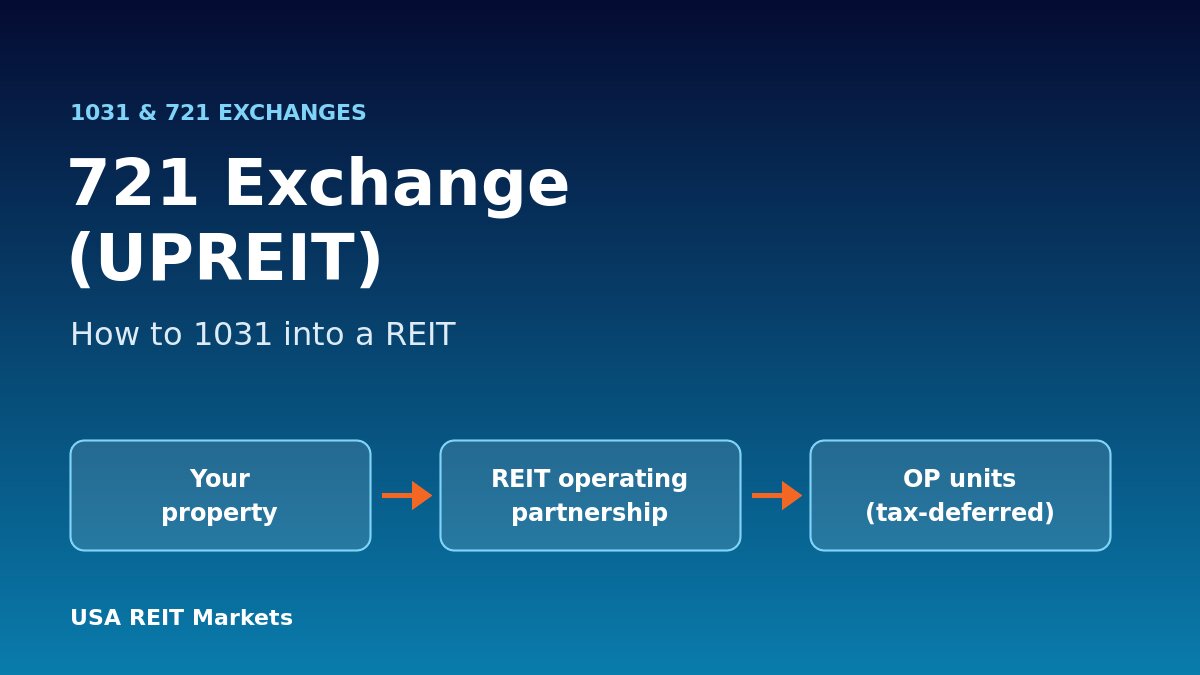
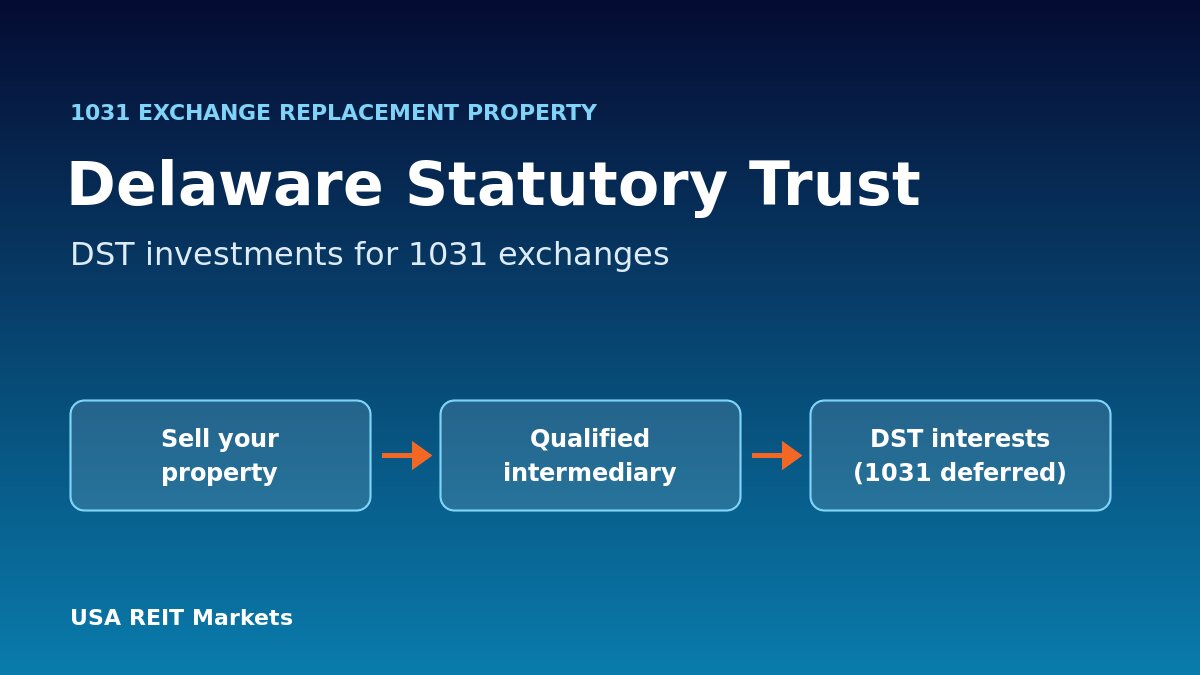
Because closing deadlines are so tight, many investors name a Delaware statutory trust (DST) interest as one of their backup identifications. DST interests can usually be bought quickly in amounts that match the remaining exchange proceeds, which helps if a property deal falls through late. Some DSTs later convert into a REIT's operating partnership through a 721 exchange (UPREIT), which has its own trade-offs.
1031 exchange timeline checklist
- Qualified intermediary engaged and exchange agreement signed before closing
- Day 0 closing date noted; day 45 and day 180 dates calculated and in your calendar
- Return due date checked (late-year sale? plan to file an extension)
- Replacement property search started before the sale closes
- Signed written identification (with backups) delivered to the QI before midnight on day 45
- Financing approved early enough to close before day 180
- Replacement property closed through the QI by day 180
- Form 8824 filed with your return (and any state forms, such as California's FTB 3840 for exchanges of California property)
FAQ
What is the 45-day rule in a 1031 exchange?
You must identify, in writing, the replacement property you may buy within 45 calendar days of selling your old property. The identification must be signed and delivered to your qualified intermediary or another party to the exchange.
What is the 180-day rule?
You must close on the replacement property within 180 calendar days of the sale, or by your tax return due date for that year if that comes first, unless you extend the return.
Do the 45 days and 180 days run at the same time?
Yes. Both start on the day you sell. The 45-day identification period is inside the 180-day exchange period.
What happens if the 45th or 180th day falls on a weekend or holiday?
Nothing changes. The deadline stays the same, so plan to finish before a weekend or holiday deadline.
Can I get an extension on a 1031 exchange?
Only in limited cases, mainly IRS relief after a federally declared disaster. A delayed closing or lender problem doesn't qualify.
How many properties can I identify?
Up to three of any value, or more if their combined value is no more than 200% of the property you sold. A third option, the 95% rule, lets you identify any number but requires you to buy almost all of them.
What is a reverse 1031 exchange?
Buying the replacement property before selling the old one. An exchange accommodation titleholder holds title in the meantime, and the whole exchange must be finished within 180 days.
Next steps
Planning an exchange? Start with the full 1031 exchange rules, see what a 1031 exchange is and how it defers tax, and compare options on our 1031 exchange page. You can browse current opportunities on the USA REIT marketplace or contact our team.
This article is for general information only and is not tax, legal or investment advice. 1031 exchange rules are strict, and the outcome depends on your situation. Work with a qualified intermediary and a tax adviser before you sell. Private real estate investments carry risk, may be illiquid, and some are available only to accredited investors.
Latest Articles