
1031 Exchange in California: Rules, Clawback and FTB 3840
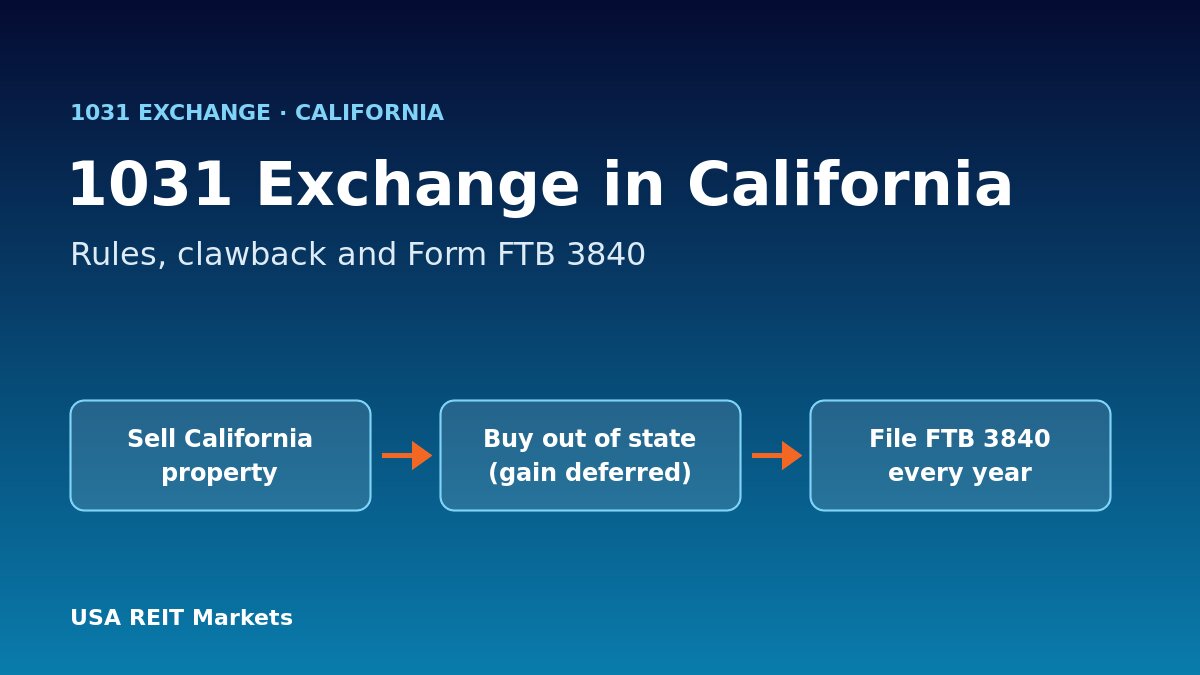
Short answer: California allows 1031 exchanges and follows the federal rules: like-kind real property, a qualified intermediary, and the 45-day and 180-day deadlines. But it adds three things investors often miss:
Want your exact dates? Enter your closing date in our free 1031 exchange calculator to get your 45-day and 180-day deadlines and an estimate of the tax you could defer.
- The clawback. If you sell California property and buy replacement property in another state, California keeps track of the gain you deferred, and taxes it when you eventually sell the out-of-state property in a taxable sale, even if you no longer live in California.
- FTB Form 3840. In that situation you must file Form FTB 3840 with California every year until the deferred California gain is finally taxed.
- Withholding. California requires withholding on many sales of California real estate. In an exchange, the qualified intermediary handles it on Form 593.
Does California allow 1031 exchanges?
Yes. California generally follows Section 1031 of the Internal Revenue Code for exchanges of real property held for investment or for use in a business. If your exchange qualifies federally, it generally qualifies for California income tax too, and the gain is deferred on both returns.
That deferral matters more in California than in most states. California taxes capital gains as ordinary income, with no lower rate for long-term gains, and the top rate is 13.3%. On a large gain, the state share of the tax bill can be substantial.
The federal rules still apply
Everything in a normal exchange applies in California:
- Like-kind real property held for investment or business use, in the United States. A California rental can be exchanged for an apartment building in Texas, land in Arizona or a Delaware statutory trust (DST) interest.
- A qualified intermediary (QI) holds the sale proceeds. If you receive the money, the exchange generally fails.
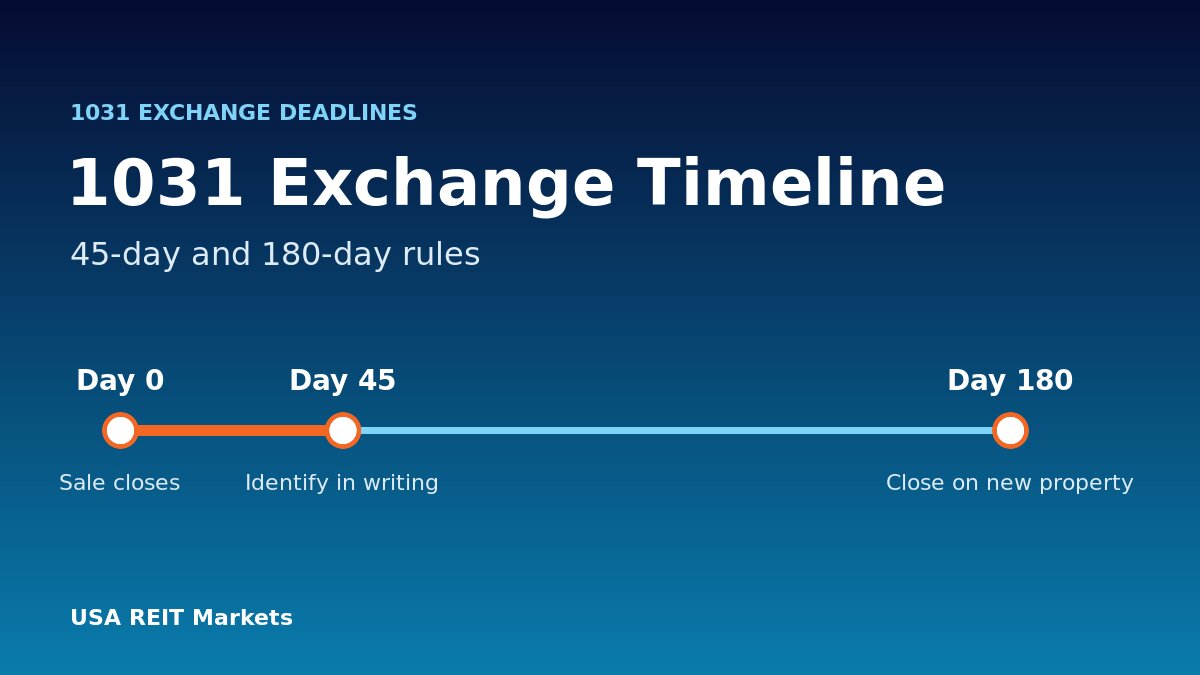
- 45 days to identify replacement property in writing, and 180 days to close (or your tax return due date, if earlier). See the 1031 exchange timeline for the day-by-day rules.
- Equal or greater value and debt to defer all of the gain. Cash or debt relief you don't replace ("boot") is taxable.
For the full federal rules, read our 1031 exchange rules guide.
The California clawback: buying replacement property out of state
Many California owners use a 1031 exchange to move their real estate to states with lower costs or no state income tax. That's allowed, but California doesn't forget the gain.
When you exchange California property for property outside California, the gain you deferred is treated as California-source gain. California keeps the right to tax it. If you later sell the out-of-state replacement property in a taxable sale, you report the deferred California gain to California, wherever you live at that time.
Example: you sell a Los Angeles apartment building with a $1 million gain and exchange into a building in Dallas. You owe no federal or California tax on the exchange. Five years later you've moved to Texas, and you sell the Dallas building for cash. California can tax the original $1 million of California-source gain. Any additional gain that built up on the Dallas building while you lived in Texas isn't California-source.
The clawback doesn't end with a second exchange. If you exchange the out-of-state property for another property, the California gain carries over to the new property and the tracking continues.
Form FTB 3840: the yearly filing
To track that gain, California requires Form FTB 3840, California Like-Kind Exchanges:
- Who files: taxpayers who exchange California real property for property located outside California.
- When: for the year of the exchange and every year after, until the deferred California-source gain is recognized on a California return. You may have to file even in years when you have no other California filing requirement.
- Annual vs. final: each year you file the form as "Annual" while you still hold the replacement property. When you sell it in a taxable sale, you file it as "Final" and report the gain.
- If you exchange again: you keep filing. You remove the property you gave up from the form, list the new one, and attach a statement explaining the exchange.
- If you don't file: the FTB can issue a proposed assessment that taxes the deferred California gain.
Keep your exchange records (closing statements, QI documents and Form 8824) for as long as you hold the replacement property. You'll need them to complete Form 3840 every year and to work out the gain when you finally sell.
California real estate withholding (Form 593)
California requires withholding on many sales of California real property. It's generally 3?% of the sales price, or an alternative amount based on the gain if the seller elects it. In a deferred 1031 exchange, the responsibility moves to the qualified intermediary, who reports the exchange on Form 593.
In practice, a properly completed exchange generally means no withholding on the exchanged amount. Withholding comes into play mainly on cash or other boot you receive, or if the exchange fails. The rules have details, such as a limit for "cash-poor" exchanges since 2022, so confirm the treatment with your QI before closing.
Other California costs a 1031 exchange doesn't defer
- Transfer taxes. County and city documentary transfer taxes are due on the sale whether or not you exchange.
- Property tax reassessment. Buying replacement property in California is a change in ownership under Proposition 13, so the new property is generally reassessed at its purchase price. A 1031 exchange defers income tax only; it doesn't carry over your old assessed value.
DSTs and 721 exchanges for California investors
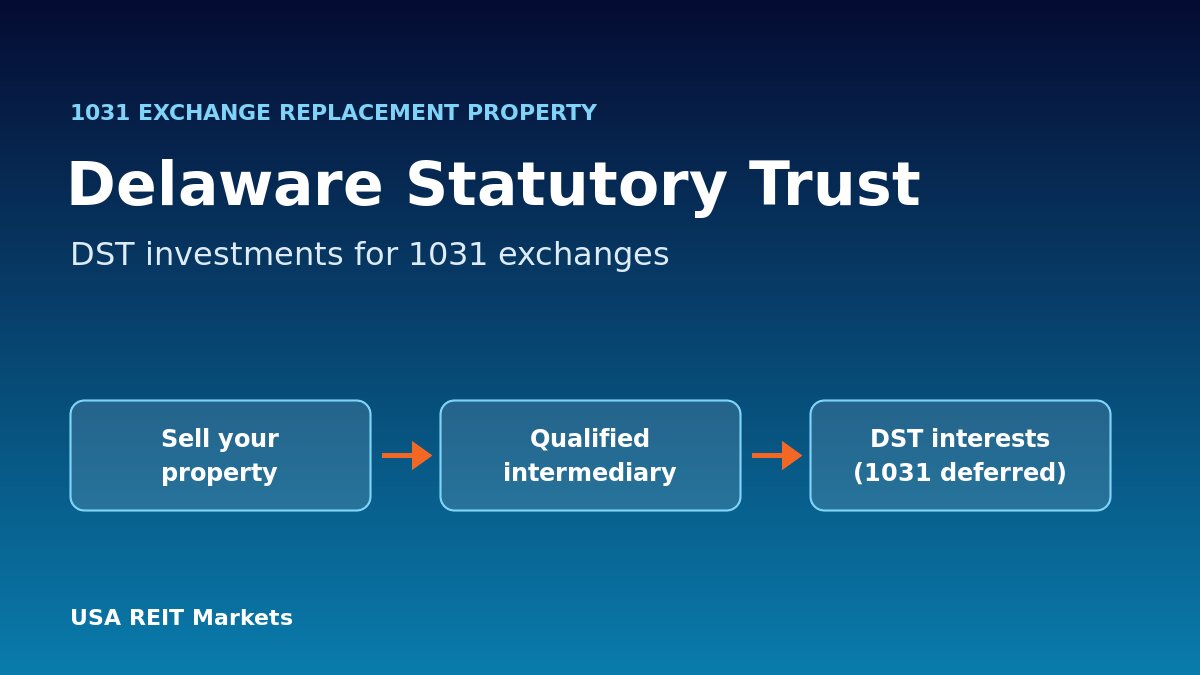
California investors often exchange into DST interests to meet the deadlines or to stop managing property. If the DST's property is outside California, it's an out-of-state replacement property and the Form 3840 rules apply.
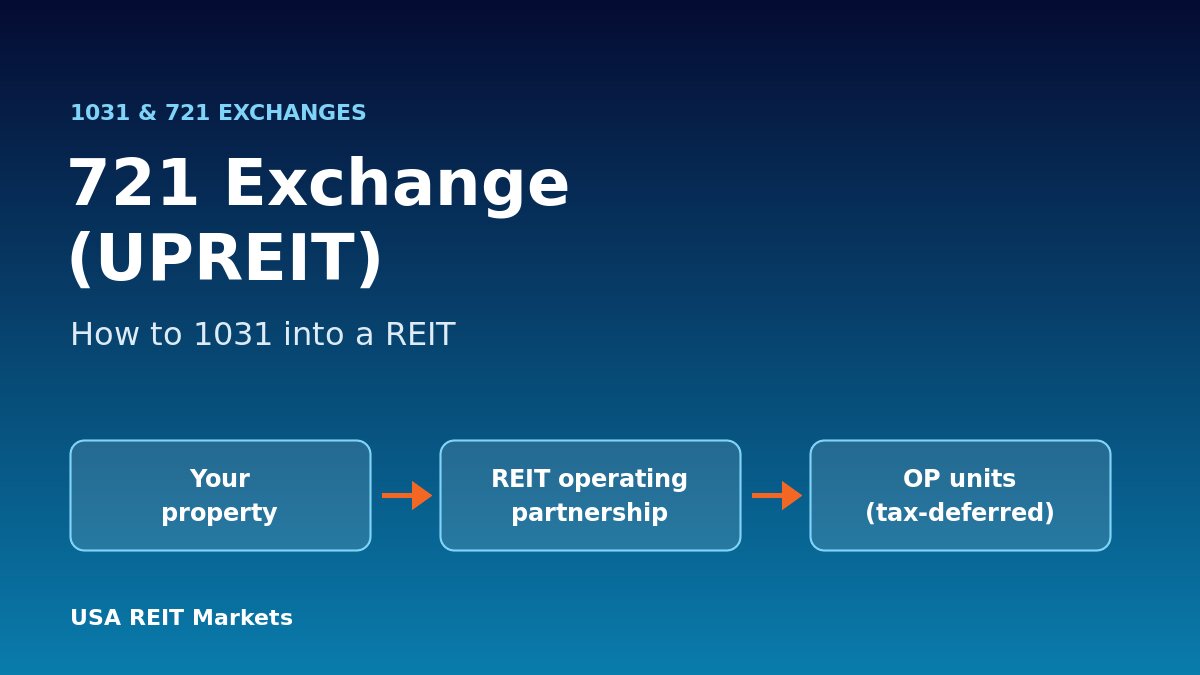
Some DSTs later convert into REIT operating partnership units through a 721 exchange (UPREIT). Ask your tax adviser how a later 721 conversion and any eventual sale of units affect the deferred California-source gain before you commit.
California 1031 exchange checklist
- Qualified intermediary engaged and exchange agreement signed before closing
- 45-day and 180-day dates in your calendar (and your tax return due date for a late-year sale)
- Form 593 withholding handled by the QI at closing
- Replacement property identified in writing by day 45, closed by day 180
- Form 8824 filed with your federal return, and the exchange reported on your California return
- If any replacement property is outside California: Form FTB 3840 filed for the exchange year and every year after
- Exchange records kept for as long as you hold the replacement property
FAQ
Does California recognize 1031 exchanges?
Yes. California generally follows the federal Section 1031 rules for exchanges of real property held for investment or business use, so a qualifying exchange defers both federal and California income tax.
Can I do a 1031 exchange from California to another state?
Yes. You can exchange California property for like-kind property anywhere in the United States. California keeps the right to tax the deferred gain later (the clawback), and you must file Form FTB 3840 every year.
What is the California clawback?
California's rule that gain deferred on California property stays California-source gain. When you sell the out-of-state replacement property in a taxable sale, California taxes the deferred gain, even if you've moved away.
What is Form FTB 3840?
The California Like-Kind Exchanges form. Taxpayers who exchange California property for out-of-state property file it for the year of the exchange and every year after, until the deferred California gain is taxed.
How much is California capital gains tax on real estate?
California taxes capital gains as ordinary income, at the same rates as wages, up to 13.3%. There's no separate lower rate for long-term gains. Federal capital gains tax and depreciation recapture apply on top.
Is there California withholding on a 1031 exchange?
The qualified intermediary handles California real estate withholding on Form 593. A completed exchange generally avoids withholding on the exchanged amount, but cash you receive or a failed exchange can trigger it.
Next steps
Planning a California exchange? Review the 1031 exchange timeline and the full rules, then compare options on our 1031 exchange page. You can browse current opportunities on the USA REIT marketplace or contact our team.
This article is for general information only and is not tax, legal or investment advice. California and federal exchange rules are complex and change over time, and the outcome depends on your situation. Work with a qualified intermediary and a tax adviser familiar with California rules. Private real estate investments carry risk, may be illiquid, and some are available only to accredited investors.
Latest Articles